She Thought She Was Renovating a Farmhouse. She Was Actually Reopening a Murder Case.
Most inherited properties come with a list of problems. Outdated wiring. A furnace that's been dying slowly since the Reagan administration. Maybe a crawl space that smells like a decision nobody wants to revisit. What they almost never come with is a hidden room containing evidence from a homicide investigation that was quietly shelved before most of the current residents of the county were born.
Almost never.
A Farmhouse Nobody Wanted
In the spring of 2009, a woman named Carol Metzger inherited her late uncle's property in a rural stretch of Lancaster County, Pennsylvania. Her uncle, a reclusive man named Raymond, had lived alone on the property for decades after his wife passed. He had no children, kept largely to himself, and left behind an estate that consisted almost entirely of the farmhouse, twelve acres of overgrown fields, and a barn that had stopped being structurally useful sometime around 1994.
Carol, a middle school art teacher from outside Philadelphia, had no intention of keeping the place. The plan was straightforward: clean it out, do the minimum necessary to make it presentable, sell it, and move on. She hired a contractor, scheduled two weeks off work, and drove out in April with a trailer, a lot of garbage bags, and no particular expectation that anything interesting would happen.
The contractor found the false wall on the third day.
What Was Behind the Wall
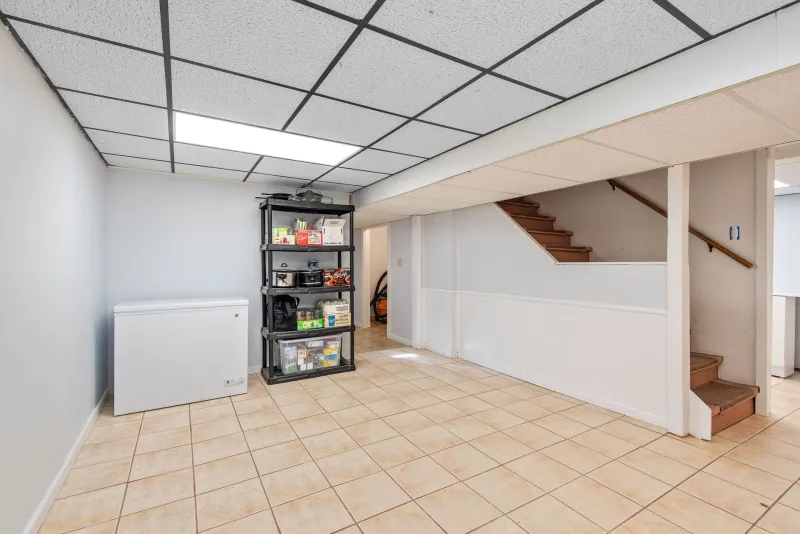
The farmhouse had a finished basement — unusual for a property of its age — and the contractor had been tasked with assessing whether the drywall was worth saving or needed to be torn out entirely. When he began pulling at a section near the back corner, he noticed that the wall didn't go all the way to the foundation. There was a gap behind it: a narrow space, maybe four feet deep and eight feet wide, that had been sealed off and drywalled over at some point in the past.
Inside the space, in cardboard boxes that had survived four decades in a cool, dry basement with remarkable fidelity, were documents. Photographs. A ledger. Several manila envelopes sealed with tape that had long since yellowed and cracked. And, wrapped carefully in an old wool blanket, a camera — a 35mm film camera with an unexposed roll still loaded inside.
Carol called the police. The police called the county sheriff. The county sheriff called the state police cold case unit.
What followed was the kind of investigation that detectives who work cold cases describe as genuinely rare: a case that had gone cold not because the evidence didn't exist, but because the evidence had been somewhere nobody thought to look.
The Case Nobody Closed
In the summer of 1967, a young woman named Diane Harwick had disappeared from a town about eleven miles from the Metzger farmhouse. She was twenty-two years old, worked at a diner, and was, by every account, the kind of person whose absence left a visible hole in a small community. Her body was found six weeks later in a creek bed. The cause of death was ruled a homicide. The investigation, conducted by a county sheriff's department that was small even by rural Pennsylvania standards, generated a suspect — a local man with a documented history of violence — but never produced enough physical evidence to bring charges.
The case was officially listed as unsolved. The lead detective retired in 1971. The suspect died in 1989, which effectively ended any remaining investigative momentum. By 2009, the Harwick case was forty-two years old and existed primarily as a footnote in the memories of people who'd been young adults when it happened.
Raymond Metzger, Carol's uncle, had been a peripheral figure in the original investigation — a neighbor who was interviewed, cleared, and largely forgotten by the official record.
What the hidden room suggested was that Raymond had not entirely forgotten about it himself.
What the Evidence Actually Showed
The documents in the boxes turned out to be Raymond's own records: notes he had kept over years, newspaper clippings about the case, and — most significantly — photographs he had apparently taken himself of the area around the crime scene in the days following the discovery of Diane Harwick's body. The photographs, when the film in the camera was developed (a process that required specialized conservation work given its age), showed additional images from what appeared to be an earlier date.
Perhaps most critically, the ledger contained entries in Raymond's handwriting that, when examined by investigators, appeared to document his own observations of the original suspect's movements in the period surrounding Diane's disappearance. Why Raymond had never brought this information to authorities — why he had instead sealed it behind a wall and said nothing for forty years — is a question that died with him.
The state police cold case unit, working with the district attorney's office, ultimately concluded that Raymond's records were consistent with and corroborating of witness testimony that had been given at the time but dismissed as unreliable. The original suspect, long dead, was named in a formal case closure document as the probable perpetrator.
Diane Harwick's surviving family — a younger sister in her seventies, a nephew — were notified in 2011.
The Quietest Kind of Justice
There's no trial at the end of this story. No dramatic courtroom moment. The man who almost certainly killed Diane Harwick died twenty years before anyone found what Raymond Metzger had hidden in his basement, and the law has limited tools for prosecuting the dead.
What there is, instead, is a case file that now says closed instead of open, a family that received a phone call confirming what they had suspected for four decades, and a farmhouse in Lancaster County that sold, eventually, to a young couple who planted a vegetable garden where the overgrown fields used to be.
Carol Metzger went back to teaching middle school art. She has said in interviews that she thinks about the room sometimes — about what it means that her uncle spent forty years keeping those records, sealing them away, unable either to come forward or to let go.
Some houses, it turns out, have been waiting a very long time to tell you something.