He Flew to Space Under the Wrong Name — and Nobody Noticed for Three Days

There's a version of this story where it sounds like a Cold War spy thriller. An astronaut assumes a false identity, slips past security, and launches into orbit before anyone can stop him. The truth is somehow stranger — and funnier — than that.
This is the story of a man who accidentally became a stowaway on his own space mission.
The Paper Trail That Went Sideways
NASA in the late 1960s and early 1970s was, by any reasonable measure, the most technically sophisticated operation on the planet. It had solved problems that engineers a generation earlier would have considered physically impossible. It had put men on the Moon. It had invented entirely new fields of science just to get there.
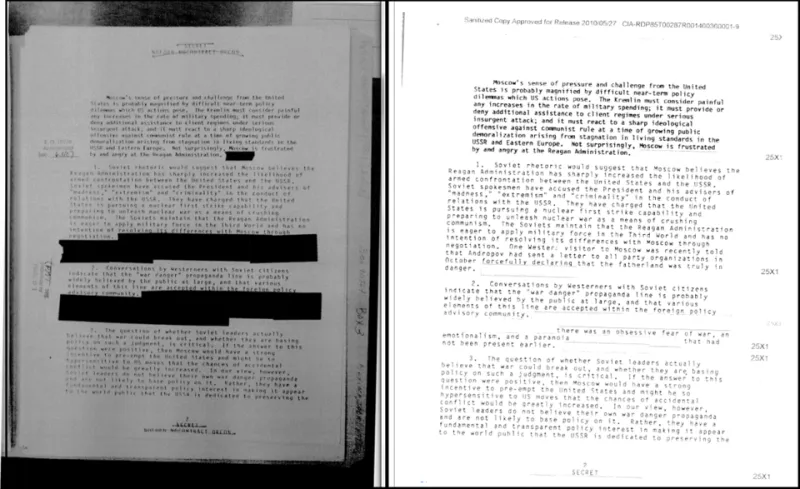
And yet, at the center of all that brilliance, there was paperwork. Mountains of it. Crew manifests, personnel files, medical clearance forms, launch authorization documents — each one generated in triplicate, routed through different departments, and cross-referenced by people who had never met each other and often never would.
The system worked, mostly. Until it didn't.
During preparations for one mission in the early Apollo era, two crew members — a primary astronaut and his backup — shared enough overlap in their scheduling and physical profiles that their documentation began to blur together at the administrative level. Training logs were filed under the wrong names. Medical sign-offs got attached to the wrong jackets. By the time launch week arrived, the paper identity of one astronaut had quietly migrated to the other.
No one flagged it. Why would they? Both men were cleared. Both men were present. The mission was go.
Strapped In Under Someone Else's Name
The astronaut in question — the one whose paperwork had been quietly reassigned — suited up, ran through his pre-launch checklist, and boarded the spacecraft exactly as he'd trained to do for months. His name was on the crew. His face was known to every technician in the building. There was no deception, no conspiracy, and no moment of dramatic hesitation.
He just happened to be officially logged, in NASA's own records, as someone else.
The rocket launched on schedule. The mission proceeded without incident. For the first day in orbit, nothing seemed unusual to anyone on the ground — because no one had reason to look closely at the crew manifest. The astronauts were doing their jobs. Mission control was doing its job. The paperwork sat quietly in its folders, wrong in a way that nobody had noticed yet.
It wasn't until a routine personnel verification check — the kind of administrative audit that happens mid-mission to confirm crew status for insurance, medical, and chain-of-command purposes — that someone finally pulled the right files and compared them to the right faces.
The names didn't match.
Three Days in Orbit as the Wrong Person
By the time mission control untangled the error, the astronaut had been in space for roughly 72 hours under his crewmate's official designation. Every log entry, every communication timestamp, every system check attributed to him during that window was filed under a name that wasn't his.
The fix, once identified, was relatively straightforward — a correction issued through official channels, the relevant documents amended, the records reconciled. No one was in danger. The mission wasn't compromised. In the grand scheme of what NASA was managing at the time, it was a clerical footnote.
But it raised a question that nobody at the agency was particularly eager to answer out loud: how does something like that happen?
A System That Trusted Itself Too Much
The honest answer is that NASA's documentation infrastructure, for all its rigor, had been designed to track hardware. Bolts, fuel lines, circuit boards — these were the things that got checked and rechecked with obsessive precision, because a failed component could kill people. Human paperwork, by contrast, moved through a parallel system that was thorough but not redundant in the same way.
When two people's files began to overlap — because of shared scheduling, similar physical data, or simple administrative fatigue — there was no automated catch. No system pinged an alert. No second set of eyes was required to verify that the name on the form matched the person in the suit.
The astronauts themselves knew who they were, obviously. But in the official record, identity was whatever the paperwork said it was. And the paperwork, for three days, said something incorrect.
The Part That Still Gets People
What makes this story genuinely strange — beyond the obvious absurdity of a man being a stowaway on his own flight — is how cleanly it exposes the gap between institutional reality and actual reality.
NASA knew exactly who was on that spacecraft. The astronauts knew. The technicians who suited them up knew. The flight director knew. But the system didn't know, not correctly, and for three days the system's version of events was the official one.
In a very technical sense, the right man flew the mission. In an equally technical sense, he wasn't supposed to be there.
Both of those things were true at the same time. That's the part that sounds like fiction.
It also, quietly, prompted a review of how NASA handled crew documentation — a review that led to redundant verification steps that are still part of launch protocol today. So in a roundabout way, one very confused set of paperwork made space travel incrementally safer for everyone who came after.
Not bad for a clerical error.