A Tiny Ohio Town Once Legally Claimed More Land Than Texas — In Antarctica
The Paperwork Nobody Thought to Question
Somewhere in the archives of a small Ohio county courthouse, there exists a document that, on its face, reads like a completely routine municipal filing. Property description, legal boundaries, authorized signatures. Standard stuff. Except the property in question was a roughly triangular wedge of frozen, windswept, uninhabited Antarctic territory — and the municipality claiming it was a midwestern town whose entire population could have fit inside a mid-sized college football stadium.
This actually happened. And for more than a decade, nobody at the federal level noticed, cared, or moved to stop it.
How a City Clerk Decided Antarctica Was Fair Game
The story traces back to the mid-1950s, a strange, fertile period in post-war international law when the legal status of Antarctic land was genuinely unresolved. The Antarctic Treaty System — the international agreement that eventually froze all territorial claims on the continent — wasn't signed until 1959, and even then it didn't fully take effect until 1961. In the years leading up to that, the question of who owned Antarctica was less a settled matter than a polite international argument nobody had gotten around to finishing.
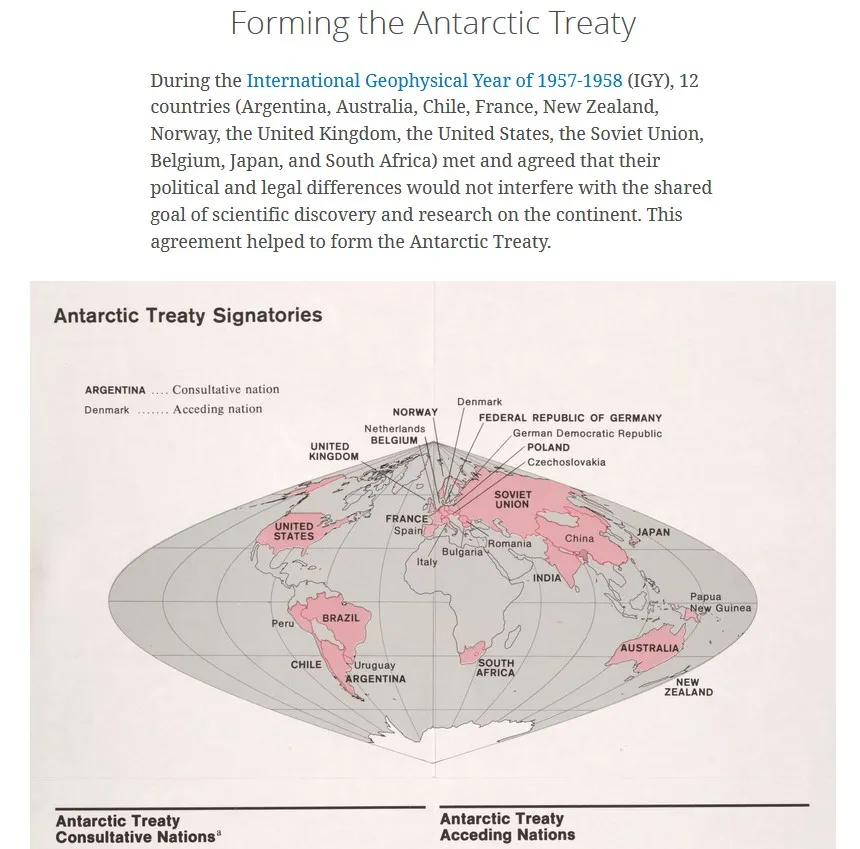 Photo: Antarctic Treaty System, via blogs.loc.gov
The city clerk in question, a meticulous and apparently very imaginative municipal official, had been wrestling with a thoroughly unglamorous local problem: the town's tax base wasn't growing, but its infrastructure costs were. Roads needed repaving. The water treatment situation was not improving. And under Ohio's municipal finance rules at the time, certain funding formulas were tied — however loosely — to calculations involving a municipality's total incorporated area.
The clerk's insight, if you want to call it that, was both creative and completely unhinged: if the town's incorporated area were dramatically larger, those calculations might look very different on paper. And if international law had left a particular wedge of Antarctica in a kind of sovereign no-man's-land, well — who exactly was going to contest a municipal annexation filing from Nowhere, Ohio?
The answer, it turned out, was nobody. At least not immediately.
The Claim That Technically Stuck
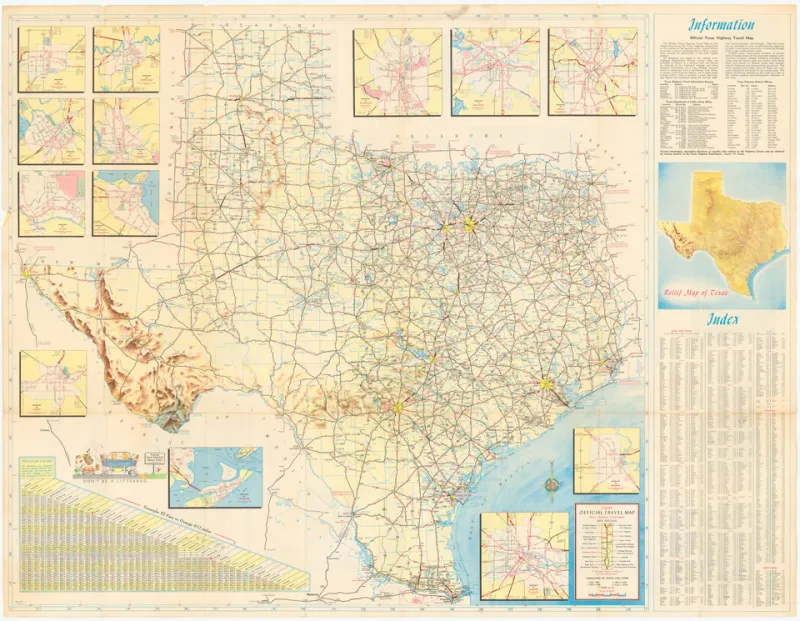
The filing was executed with the same careful bureaucratic language used for any routine property annexation. The territory described — a pie-slice-shaped section of Antarctic land running from a coastal point down toward the pole — measured somewhere in the range of 280,000 square miles when the clerk's hand-drawn boundaries were calculated properly. That's larger than the state of Texas by a comfortable margin. The town claiming it had a population of a few thousand people and one traffic light.
Because the filing was processed through county records rather than federal channels, it didn't trigger any immediate alarm. It sat there, technically uncontested, while the town quietly adjusted certain budget projections and the clerk apparently considered the matter resolved.
Local residents, for their part, were largely unaware this had happened. Those who did find out seemed to regard it with the same mild amusement you'd reserve for a neighbor who'd planted a garden in an awkward spot. It wasn't their problem. It was cold down there. Nobody was going.
When Washington Finally Looked Up
The federal government's discovery of the filing came not through any dramatic intelligence operation, but through the grinding bureaucratic process of a State Department review prompted by the lead-up to Antarctic Treaty negotiations. Someone, somewhere, was compiling a list of outstanding American territorial assertions — official and otherwise — and a researcher stumbled across the Ohio county record while cross-referencing municipal annexation filings in the Great Lakes region.
The response from Washington was reportedly less outrage than bafflement. Federal officials contacted the town, explained with some delicacy that municipalities did not have the authority to annex foreign or unclaimed territory, and requested that the filing be formally withdrawn. The town's leadership at the time agreed without much drama. The clerk who had originated the scheme had by then moved on to other employment.
The corrected record was filed. The Antarctic claim was voided. The town went back to having the same square mileage it always had, and the funding formulas it had briefly gamed returned to their previous, less favorable configurations.
Why This Story Refuses to Be Boring
What makes this episode stick — beyond the sheer absurdity of a midwestern town briefly holding more territory than the American Southwest — is what it reveals about the gaps that exist in legal systems during moments of genuine international uncertainty.
The Antarctic Treaty was designed precisely to prevent this kind of chaos, to freeze competing claims and establish the continent as a shared scientific preserve. It worked. But in the window before it existed, the rules were genuinely unclear enough that a determined county clerk with a drafting pencil and a flexible interpretation of municipal law could make a claim that held up, technically, for years.
The town never got a penguin. It never sent an expedition. It never planted a flag. But for a brief, strange stretch of the 1950s, it was — on paper, in a county courthouse, in one very creative official's filing cabinet — the largest municipality in the history of the United States.
That actually happened. The paperwork proved it.