One Furious Sailor Took the Ocean to Court — and a Judge Actually Had to Think About It

Photo: American 19th Century, CC0, via Wikimedia Commons
Most people, after losing their cargo to a violent storm at sea, would grieve their losses, settle their debts, and eventually accept that the Atlantic Ocean does not care about their business interests. Most people would not spend the better part of a decade arguing in multiple courtrooms that an act of nature is not, actually, a legally acceptable excuse.
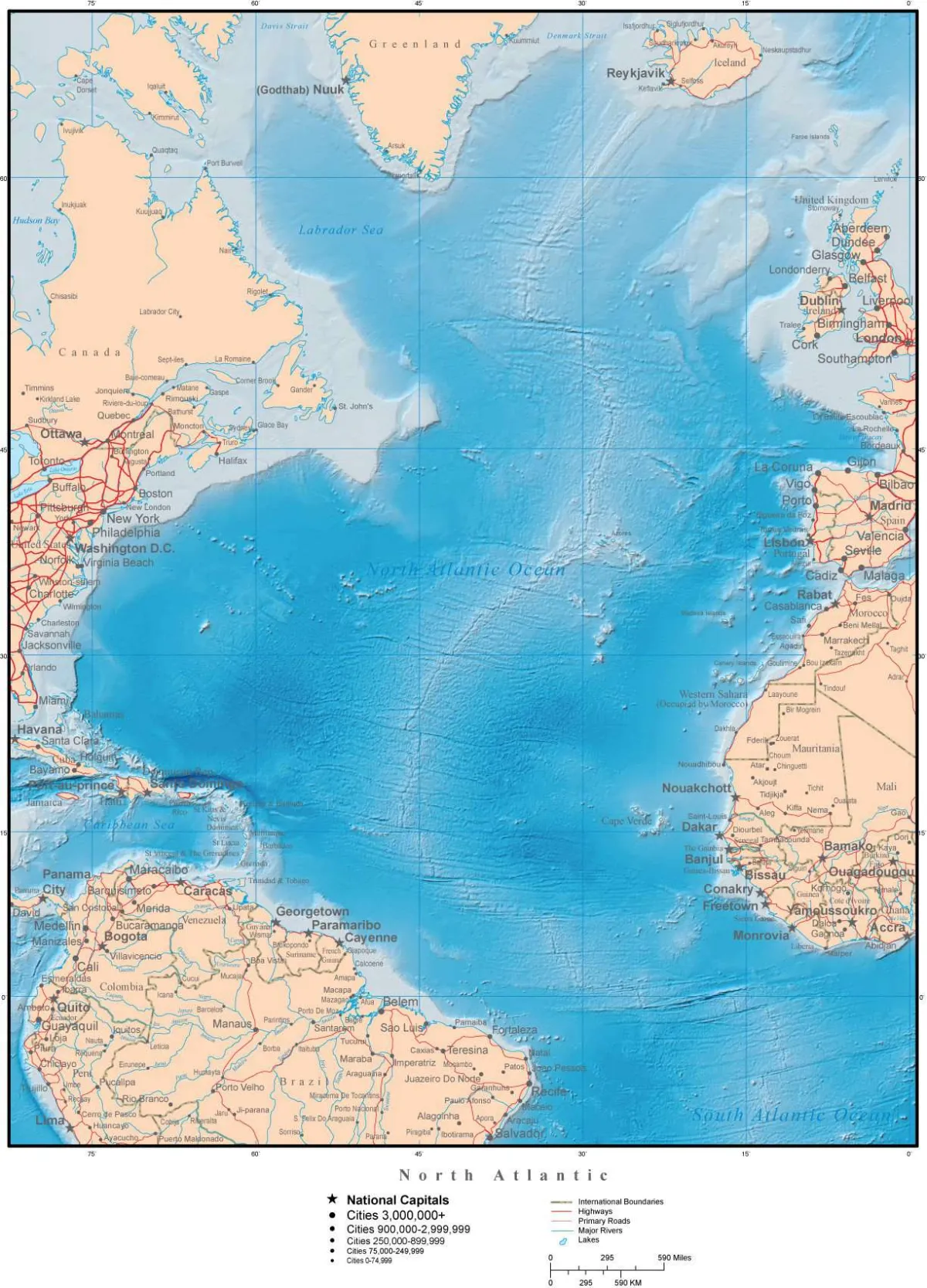 Photo: Atlantic Ocean, via cdn.shopify.com
Most people were not this particular sailor.
The Wreck That Started Everything
Sometime in the mid-1800s, an American merchant sailor — let's call him a man of extraordinary stubbornness, because the historical record makes clear that this was his defining characteristic — lost a significant cargo shipment when the vessel carrying it was caught in a severe Atlantic storm. The ship survived. The cargo did not. The sailor, who had contracted with a shipping company to transport goods he'd staked a considerable sum on, found himself holding nothing but a bill of lading and a very bad mood.
The shipping company's response was what it had always been in such situations: sympathetic, brief, and final. The contract contained a standard clause exempting the company from liability in cases of "acts of God" — the legal shorthand that had governed maritime commerce for centuries. A storm was an act of God. The company was sorry for his loss. Good day.
The sailor did not have a good day. He had a lawsuit.
The Argument That Shouldn't Have Worked
The legal theory he and his attorney advanced was, on its surface, simple: the act-of-God exemption should not apply when a shipping company's negligence contributed to the damage. The storm, they argued, was not the only cause of the cargo's destruction. The vessel had been improperly loaded. The crew had made navigational decisions that put the ship in the storm's path unnecessarily. The company's own practices had amplified what nature had started.
This was not, technically, a lawsuit against the ocean. It was a lawsuit against the shipping company for failing to adequately protect cargo against foreseeable maritime hazards. But the framing — that a company could not simply invoke weather as a universal shield against any loss that occurred during bad weather — was genuinely radical for its time.
Maritime law in 19th-century America leaned heavily on the act-of-God doctrine. Shipping was dangerous. Everyone knew it was dangerous. Merchants who sent goods by sea accepted a baseline of risk that courts had consistently refused to place on the carriers. The sailor's argument asked courts to draw a line between weather as a cause and weather as a cover story — and that was a much harder line to draw than it sounds.
The Judge Who Almost Agreed
The case worked its way through the lower courts largely as expected: dismissed, appealed, dismissed again. But somewhere in the appellate process, it landed in front of a judge who found the central argument genuinely compelling.
The judge's written opinion, while ultimately ruling against the sailor, spent an unusual amount of time engaging seriously with his position. The court acknowledged that the act-of-God doctrine had been applied with increasing looseness — that shipping companies had used it to excuse not just genuine natural disasters but a broader category of losses where their own conduct had played a meaningful role. The judge stopped short of ruling for the plaintiff, but he said something that would echo through maritime legal circles for years: that the doctrine required "some reasonable proportionality between the force of nature invoked and the totality of circumstances" that produced the loss.
In plain English: you can blame the storm, but only for what the storm actually did.
The Ripple Effect Nobody Planned For
The sailor lost his case. He did not, as far as the record shows, recover his losses. What he did do — entirely without intending to — was plant a seed in American maritime jurisprudence that quietly grew into something significant.
In the decades following the case, courts began citing the opinion's nuanced language when evaluating act-of-God defenses in shipping disputes. The idea that carriers couldn't use weather as a blanket exemption when their own negligence was a contributing factor became increasingly accepted. By the early 20th century, it had worked its way into the formal legal standards governing maritime liability — standards that influenced how insurance policies were written, how contracts were drafted, and how courts evaluated responsibility when ships, storms, and human error combined.
The Harter Act of 1893, which reformed American maritime law and placed new obligations on ship owners to properly equip and man their vessels, reflected many of the same principles the stubborn sailor had argued years earlier. Legal historians who have traced the lineage of that legislation note the slow accumulation of cases — including this one — that made the reform politically and legally possible.
 Photo: Harter Act of 1893, via rsiasacademy.com
The Stubbornness That Moved the Law
What makes this story worth telling isn't the legal technicalities. It's the image of one person, furious and broke, deciding that "the sea just does that sometimes" was not a sufficient answer and spending years making that argument in courtrooms that mostly didn't want to hear it.
He was right, in the way that people who are slightly ahead of their time are right — not vindicated in the moment, but vindicated eventually, by the slow movement of institutions toward a position they weren't ready to adopt when he first proposed it.
The ocean didn't care. The courts, eventually, did.
And it started with one sailor who refused to accept that a storm was an excuse.