The Librarian Who Accidentally Became America's Quietest Cold War Hero
The Spy Who Came in from the Stacks
In the sleepy town of Brattleboro, Vermont, population 12,000, the most exciting thing that usually happened at the public library was someone returning a book late. That changed in 1962 when head librarian Margaret Chen noticed something odd about her patrons' reading habits—a discovery that would accidentally blow the cover off a sophisticated Soviet intelligence network.
 Photo: Margaret Chen, via urbanstudies.brussels
 Photo: Brattleboro, Vermont, via c8.alamy.com
Chen had worked at the Brattleboro Public Library for eight years, and she knew her regular customers' preferences better than they did. Mrs. Henderson always checked out romance novels. Professor Williams favored Civil War histories. The high school students gravitated toward anything that wasn't assigned reading.
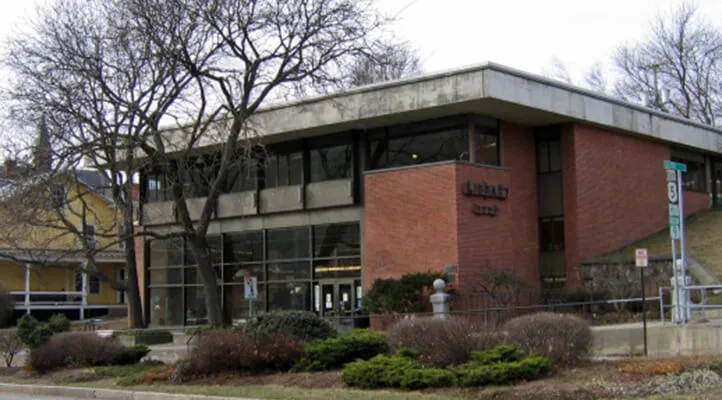 Photo: Brattleboro Public Library, via archermayor.com
So when a series of new patrons began requesting highly specific technical manuals, industrial reports, and government publications, Chen's librarian instincts kicked in.
The Pattern in the Dewey Decimal System
What caught Chen's attention wasn't just the unusual requests—it was their systematic nature. Over several months, different individuals had requested materials on topics that seemed oddly coordinated: nuclear engineering texts, detailed maps of military installations, industrial chemistry manuals, and reports on American manufacturing capabilities.
The requests came from people who didn't look like typical researchers. They were well-dressed, polite, and paid their library fees in cash—always exact change. They never browsed, never socialized, and always knew exactly which materials they wanted before approaching the circulation desk.
Chen began keeping informal notes, more out of curiosity than suspicion. She recorded which books were requested, by whom, and when. The pattern that emerged was unsettling: the requests seemed designed to build a comprehensive picture of American industrial and military capabilities.
When Curiosity Met National Security
After six months of documentation, Chen decided to share her observations with someone in authority. In small-town Vermont, that meant Police Chief Robert Murphy, who knew Chen from their shared membership in the local historical society.
Murphy initially dismissed Chen's concerns as librarian paranoia. But when she showed him her meticulously organized notes—complete with cross-references and timeline analysis—he realized she might be onto something significant.
The chief contacted the FBI field office in Burlington, expecting to be politely brushed off. Instead, Agent Patricia Kowalski arrived in Brattleboro within 48 hours, very interested in Chen's amateur intelligence gathering.
The Quiet Investigation
What Chen had stumbled upon was a sophisticated Soviet intelligence operation using public libraries across New England as information-gathering hubs. The KGB had realized that American libraries contained a treasure trove of publicly available technical information that would be difficult to obtain through traditional espionage channels.
The operation was brilliant in its simplicity. Rather than risking exposure through break-ins or bribery, Soviet agents posed as researchers and students, systematically collecting open-source intelligence from library collections. They targeted small-town libraries specifically because they attracted less scrutiny than urban institutions.
Agent Kowalski worked with Chen to set up a discreet monitoring system. Chen continued her normal duties while documenting the suspicious patrons' activities. The FBI installed hidden cameras and began tracking the individuals Chen had identified.
The Network Unravels
The investigation revealed that the Brattleboro operation was part of a larger network spanning libraries in Vermont, New Hampshire, and Maine. Soviet agents were systematically harvesting technical information from dozens of small-town libraries, building detailed intelligence profiles on American industrial capabilities.
The breakthrough came when Chen noticed that one of her suspicious patrons had requested the same obscure metallurgy manual from three different libraries within a week. Cross-referencing with other libraries revealed a pattern of coordinated information gathering that helped the FBI map the entire network.
In March 1963, the FBI quietly arrested twelve individuals across New England on espionage charges. The arrests made headlines, but Chen's role remained largely secret to protect her safety and maintain the effectiveness of library-based surveillance.
The Dewey Decimal Defense
Chen's accidental counterintelligence work led to significant changes in how America approached information security. The FBI established formal liaison programs with librarians nationwide, training them to recognize suspicious research patterns without compromising intellectual freedom.
The "Library Watch" program, as it became known internally, proved remarkably effective throughout the Cold War. Librarians across the country quietly helped identify dozens of intelligence operations, earning recognition as unlikely heroes in the battle for information security.
Chen received a commendation from FBI Director J. Edgar Hoover, though the award remained classified for decades. She continued working at the Brattleboro library until her retirement in 1987, always maintaining discretion about her role in the spy case.
The Quiet Hero
Margaret Chen's story remained largely unknown until declassified FBI documents revealed her contribution in the 1990s. By then, she had passed away, never having sought recognition for her accidental service to national security.
Her legacy lives on in the ongoing relationship between libraries and law enforcement—a partnership born from one librarian's attention to detail and willingness to trust her instincts. Chen proved that sometimes the most effective intelligence work happens not in shadowy meeting places or high-tech facilities, but in the quiet corners of small-town America.
Actually, It Happened
The Brattleboro spy ring case became a landmark in Cold War counterintelligence, demonstrating how ordinary citizens could play crucial roles in national security simply by doing their jobs well and staying alert to unusual patterns.
Chen's story reminds us that heroism often comes in quiet packages, and that sometimes the most important battles are fought not with weapons or technology, but with careful observation and civic responsibility. In the world of espionage, it turned out that the pen—and the library card—really was mightier than the sword.