He Was Trying to Break the Law. He Accidentally Fixed a 50-Year Engineering Disaster.

Photo by Photo by Ally Griffin on Unsplash on Unsplash
The Fire That Outlived Everyone Who Fought It
By the time Raymond Hessler decided to burn some brush on a Tuesday afternoon in 1962, the fire underground had already been burning for nearly five decades. It had outlasted the careers of three township fire chiefs, survived multiple federally funded suppression attempts, and consumed enough coal seam to leave noticeable subsidence cracks running through a field on the eastern edge of the property. Engineers from as far away as Pittsburgh had come, looked at it, drawn diagrams, and left without solving it.
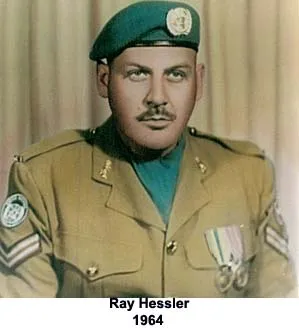 Photo: Raymond Hessler, via cavunp.ab.ca
Hessler didn't know any of this. He just wanted to clear a patch of overgrown scrub from the back corner of his property, and burning was faster than hauling.
He was, by the way, absolutely not supposed to be burning anything. Open burning on private land in that county had been restricted since the late 1940s. Hessler knew this. He did it anyway.
What happened next is one of the most accidental acts of environmental remediation in Pennsylvania history.
How Underground Coal Fires Work — And Why They're So Hard to Kill
To understand what Hessler stumbled into, it helps to understand why coal seam fires are such a nightmare to extinguish in the first place. Underground coal fires don't behave like surface fires. They're not fighting you openly. They creep through existing seams and fissures at their own pace, feeding on oxygen that filters down through cracks in the ground above. They can shift direction based on underground geology. They produce heat and gases that rise through the surface soil in unpredictable patterns.
The standard suppression approaches — flooding the area with water, pumping in slurry, excavating the burning material — all work in theory. In practice, they often just redirect the fire rather than extinguish it. The fire burning beneath the western Pennsylvania township had proven particularly stubborn because the local coal seam ran at an angle that made excavation prohibitively expensive and water suppression almost completely ineffective. Every serious attempt to smother it had simply pushed it laterally into a new section of seam.
What the fire actually needed — what would actually kill it — was a sudden, comprehensive interruption of its oxygen supply across a wide enough area to prevent it from just finding a new path. Nobody had managed to engineer that. It required covering the right surface area at the right moment with the right material.
Enter Raymond Hessler with a pile of wet leaves, dead grass, and a match.
The Accident That Worked
The brush Hessler set alight caught poorly. The material was damper than he'd anticipated, and instead of burning cleanly, it smoldered heavily, producing a thick, low-lying layer of smoke and generating a substantial amount of fine ash and particulate matter that settled across the ground in a wide, dense blanket. Hessler, frustrated with his own fire's performance, began piling more material onto the smolder to encourage it — which made the surface blanketing effect even more pronounced.
What he had inadvertently created was a near-perfect temporary seal across roughly two acres of surface directly above the most active section of the underground fire. The ash and smoldering debris packed into the surface cracks — the very fissures through which the underground fire had been drawing oxygen for years — with a density and coverage that no engineered slurry attempt had achieved.
Within 72 hours, ground temperature readings at the site dropped measurably. Within three weeks, the subsidence cracks had stopped venting heat. By the end of the month, independent assessments confirmed what township officials could barely bring themselves to say out loud: the underground fire appeared to be out.
All of it. The whole thing. Gone.
The Township's Reaction Was Exactly What You'd Expect
Here is where the story achieves a kind of perfect irony. Raymond Hessler, having accidentally solved a 50-year engineering problem in a single clumsy afternoon, was issued a citation for illegal open burning.
The township — which had spent decades and considerable public money failing to extinguish the very fire Hessler had just killed — fined him $40 and required him to appear before a local magistrate. There was apparently some internal debate about whether to acknowledge the connection between his illegal burn and the fire's extinction. The decision, ultimately, was to keep those two matters entirely separate. The citation stood. The fine was paid.
Local engineers did eventually document the mechanism by which Hessler's surface smolder had sealed the oxygen supply, and the case became a minor footnote in Pennsylvania mining and fire management literature. The documentation is notably careful never to describe Hessler's actions as a solution, preferring language like "coincidental surface conditions" and "fortuitous particulate accumulation."
The Shadow of Centralia
It's impossible to tell this story without mentioning what happened a few counties over, where a remarkably similar underground coal fire was allowed to burn unchecked through the 1960s and 1970s until it had hollowed out an entire community. Centralia, Pennsylvania became a national symbol of slow-motion environmental catastrophe — a town progressively abandoned as the fire beneath it consumed the ground itself, sending toxic gases through cellar floors and collapsing roads without warning. It still burns today.
Centralia and the township where Hessler accidentally saved the day are not far apart geographically. The fires were of similar origin and similar stubbornness. The difference in outcome came down to timing, geology, local resources — and, in one case, a guy who shouldn't have been burning brush on a Tuesday afternoon.
He paid his $40. The fire stayed out. Nobody gave him a plaque.