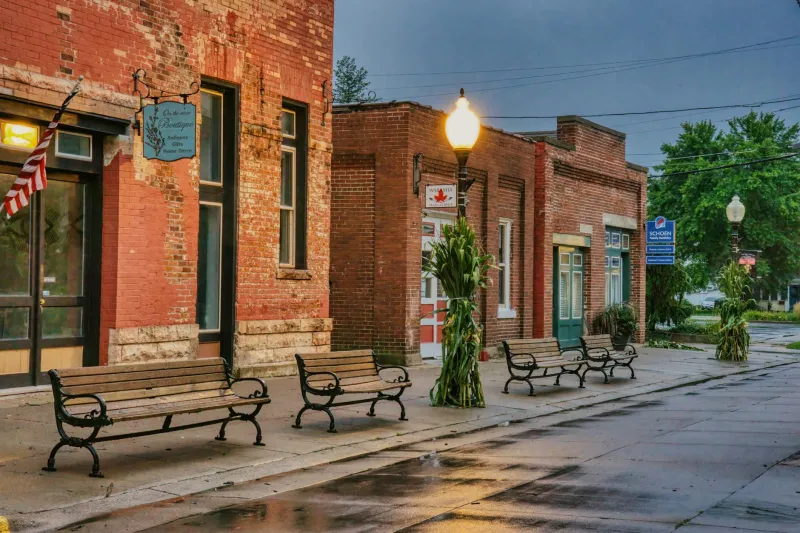
The Day Two Bureaucrats Changed Everything
Imagine living in a place where your driver's license says one thing, your mail says another, and both are technically correct. For nearly nine decades, that was daily life in what residents called either Millfield or Riverside — depending on who was asking and which government form they were filling out.
The confusion began in 1891 when two separate filing errors created one of the strangest municipal identity crises in American history. What should have been a simple town incorporation instead became a bureaucratic nightmare that would perplex residents, confuse mail carriers, and create legal headaches for generations.
The story starts with ambitious railroad developer Marcus Whitman, who purchased 2,400 acres of prime farmland in southeastern Ohio with plans to build a thriving agricultural hub. Whitman envisioned a town centered around his new grain mill, strategically positioned along the Hocking River to serve the region's growing farming community.
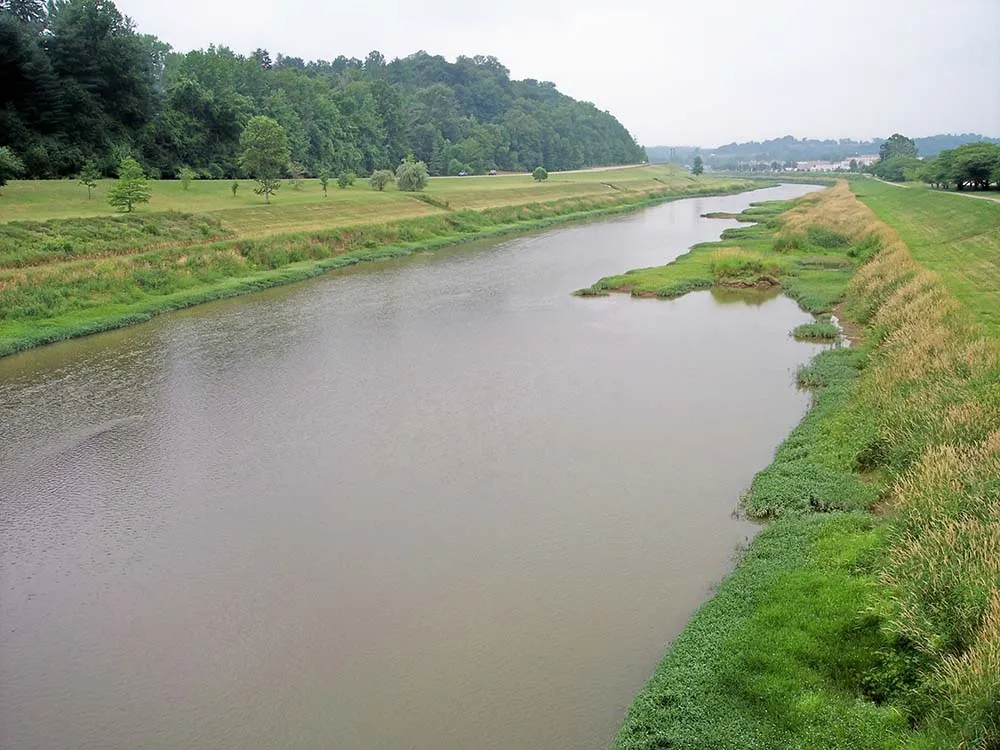 Photo: Hocking River, via gohocking.com
 Photo: Marcus Whitman, via www.oregonencyclopedia.org
When Good Intentions Meet Bad Handwriting
Whitman filed incorporation papers with Athens County in March 1891, officially registering his new settlement as "Millfield" — a straightforward name reflecting the grain mill that would anchor the local economy. County Clerk Benjamin Foster dutifully recorded the incorporation, stamping the papers and filing them in the official registry.
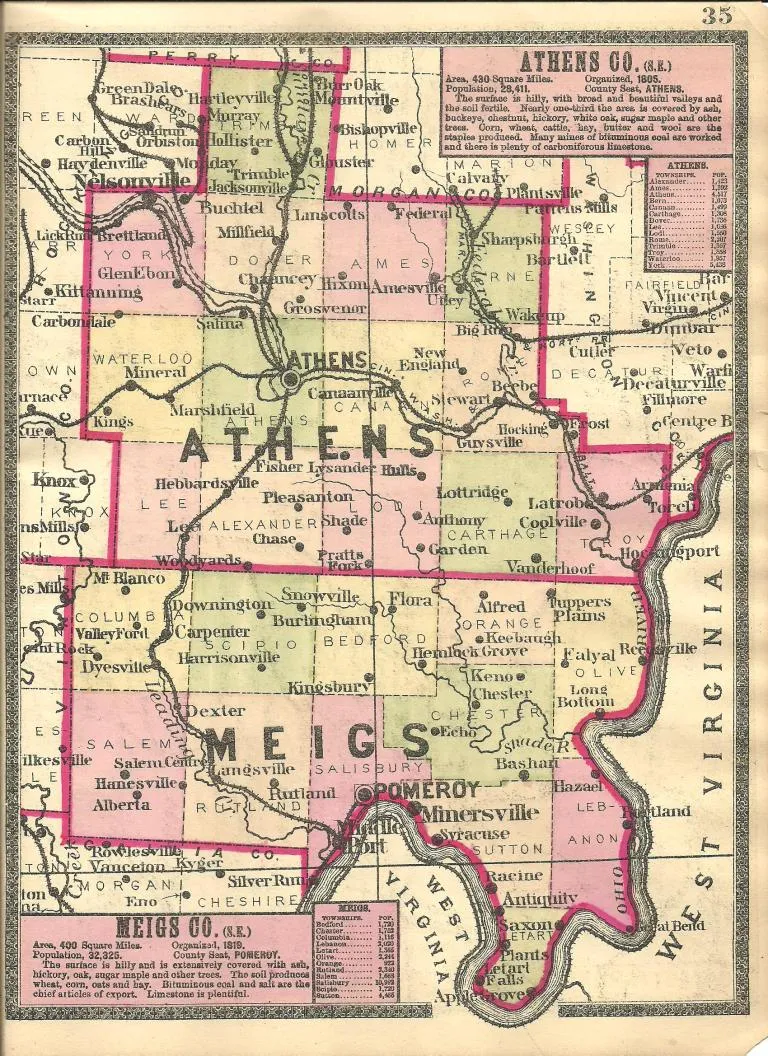 Photo: Athens County, via ohioghosttowns.files.wordpress.com
Meanwhile, Whitman also applied for postal service, submitting a separate application to the U.S. Post Office Department in Washington, D.C. This is where things went sideways.
Postal clerk Henry Morrison, working through a stack of applications, misread Whitman's handwritten submission. Instead of "Millfield," Morrison recorded the town name as "Riverside." The error made logical sense — the settlement did sit alongside the Hocking River — so Morrison approved the application without question.
Within weeks, Millfield had its first post office, officially designated to serve the town of Riverside.
Two Names, One Very Confused Town
For the first few years, residents barely noticed the discrepancy. Mail arrived addressed to "Riverside," while county tax bills and legal documents listed "Millfield." Most people assumed it was a temporary mix-up that would resolve itself.
They were wrong.
As the town grew, the dual-name situation created increasingly complex problems. Property deeds filed with Athens County listed Millfield addresses, but mortgage documents from out-of-state banks used Riverside. Insurance companies couldn't determine which name was legally valid, leading to coverage disputes. The Ohio Department of Transportation installed road signs reading "Millfield," while U.S. Geological Survey maps showed "Riverside."
Local businessman Robert Chen discovered the full scope of the problem in 1923 when he tried to incorporate his hardware store. "I spent three weeks going back and forth between county offices and the post office," Chen later recalled. "Nobody could tell me what town I was actually in."
The Bureaucratic Standoff
Multiple attempts to resolve the name conflict failed spectacularly. In 1934, Mayor Dorothy Ashford petitioned the Post Office Department to change the postal designation to Millfield, matching county records. The request was denied because "Riverside" had been in use for over four decades and changing it would disrupt mail delivery across southeastern Ohio.
Athens County officials proved equally stubborn. When the post office suggested updating incorporation records to reflect "Riverside," County Clerk James Morrison (Henry's nephew, coincidentally) refused. "We don't change legal documents based on postal errors," he stated firmly.
The standoff intensified during World War II when military recruitment officers couldn't determine which name to use on draft notices. Some residents received multiple draft cards listing different hometowns. The War Department eventually issued a special directive allowing either name for military personnel from the area.
Living in Limbo
By the 1950s, residents had adapted to their town's dual identity with a mixture of pride and exasperation. Local businesses often included both names in their advertising: "Johnson's Grocery — Serving Millfield/Riverside since 1947." The high school sports teams were known as the "Millfield-Riverside Eagles," though visiting teams never knew which name to put on their schedules.
The confusion reached peak absurdity in 1967 when the town applied for federal disaster relief after flooding damaged downtown businesses. The Federal Emergency Management Agency initially rejected the application because they couldn't locate "Millfield" in their postal database. It took six months of paperwork to prove that Millfield and Riverside were the same place.
"We got pretty good at explaining ourselves," remembered longtime resident Martha Stevens. "Whenever someone asked where we lived, we'd say 'Millfield, also known as Riverside, in Athens County, Ohio.' It became like a town motto."
The Computer Age Forces a Decision
The dual-name situation might have continued indefinitely if not for the digital revolution. In 1978, the U.S. Postal Service began computerizing address databases, and their new system couldn't accommodate a town with two official names in the same location.
Postal officials issued an ultimatum: the town had to choose one name by January 1, 1979, or face potential mail service suspension. After 87 years of bureaucratic stubbornness, technology finally forced a resolution.
The decision sparked the most contentious town meeting in local history. Longtime families identified strongly with "Millfield," while newer residents preferred "Riverside." The debate raged for months, with passionate arguments on both sides.
The final vote was surprisingly close: 847 residents chose to keep "Millfield," while 831 preferred "Riverside." On December 15, 1978, the U.S. Post Office officially changed the postal designation to match county records.
The End of an Era
Today, the town is unambiguously known as Millfield, Ohio. Road signs, maps, and mail all agree. But longtime residents remember when their hometown existed in a bureaucratic twilight zone where something as basic as a town's name could remain genuinely uncertain for nearly a century.
The old "Riverside" post office sign still hangs in the local historical society, a reminder of the day when American bureaucracy created a place that officially existed and didn't exist at the same time.