When Your Address Becomes a Legal Nightmare
Imagine getting two tax bills every year — not because you own property in two places, but because nobody can agree which state your house is actually in. For the residents of Bristol, this wasn't a hypothetical scenario. It was daily life for the better part of a century.
In 1749, surveyors were tasked with marking the boundary between Virginia and Tennessee. Simple enough, right? Draw a line, plant some markers, call it a day. Except the team apparently brought the 18th-century equivalent of a broken GPS. Their measurements were off by just enough to create one of America's most administratively absurd situations: a town that legally existed in two states simultaneously.
Double Everything, Double the Trouble
Bristol's residents quickly discovered that being geographically confused came with some uniquely annoying perks. Every election season, they could vote twice — once as Virginia residents, once as Tennesseans. Sounds great until you realize they were also paying property taxes to both states.
The postal service threw up its hands entirely. Mail addressed to "Bristol, Virginia" might end up at the same house as mail sent to "Bristol, Tennessee." Wedding invitations became geography lessons. Business licenses required lawyers just to figure out which state's regulations applied.
Local merchant Samuel Henderson discovered this the hard way in 1887 when he tried to open a general store. Virginia officials insisted he needed a Virginia business license. Tennessee authorities demanded Tennessee paperwork. Henderson, whose store sat squarely on the disputed border, ended up with two sets of everything: two licenses, two tax obligations, and two different sets of health inspectors who couldn't agree on which side of his counter they had jurisdiction over.
The Great Jurisdictional Standoff
Law enforcement became a comedy of errors. Virginia deputies would arrest someone for disturbing the peace, only to have Tennessee officers show up claiming the crime happened in their jurisdiction. Sometimes the same arrest happened twice.
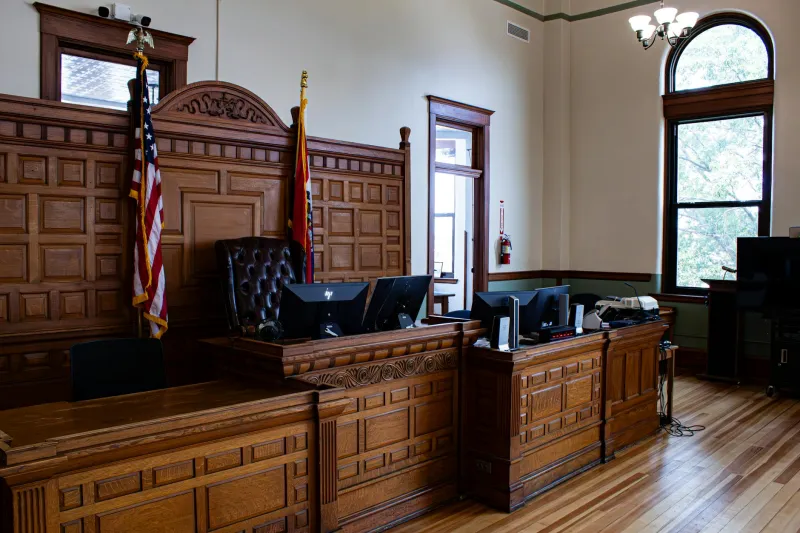
In 1903, a bar fight at Murphy's Tavern resulted in the same man being charged with assault in both states. The defendant, clever enough to realize the legal absurdity, demanded separate trials. Virginia convicted him and sentenced him to six months. Tennessee found him not guilty. He served three months in a Virginia jail, then walked free under Tennessee law, technically a convicted felon and an innocent man simultaneously.
The situation reached peak bureaucratic madness when both states tried to collect inheritance taxes from the estate of Margaret Whitman, a widow whose house straddled the border. Her kitchen was in Virginia, her bedroom in Tennessee. When she died in 1912, both states claimed her entire estate fell under their tax jurisdiction. The legal battle lasted longer than most marriages.
Living in Legal Limbo
Children born in Bristol faced an existential crisis from birth: which state were they actually from? Birth certificates became philosophical documents. Some families hedged their bets and registered births in both states, creating a generation of kids who were technically dual citizens of the same country.
School districts couldn't figure out which children they were responsible for educating. Some kids attended Virginia schools in the morning and Tennessee schools in the afternoon. Others fell through the cracks entirely, becoming educational refugees in their own hometown.
The fire department operated under the assumption that fires don't respect state lines, but their insurance company disagreed. When the Williams family's house caught fire in 1919, the Virginia fire crew put out the flames in the Virginia half while the Tennessee crew handled the Tennessee side. The family received two separate bills.
The Solution That Wasn't Really a Solution
By the 1920s, everyone was tired of the paperwork nightmare. Federal surveyors were called in to settle the matter once and for all. They confirmed what everyone suspected: the original survey was spectacularly wrong.
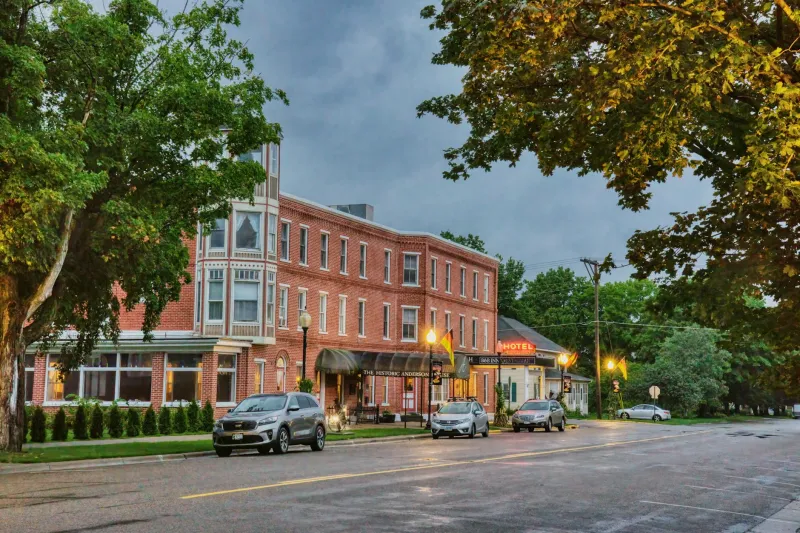
But here's where the story gets even stranger. Instead of picking one state and moving everyone's allegiance accordingly, officials decided to embrace the chaos. They drew an official line down the middle of State Street, literally dividing the town in half. Houses on the north side became Virginia residents. South side residents were officially Tennesseans.
Families whose homes crossed the new line had to choose. Some picked Virginia for lower taxes. Others chose Tennessee for better schools. A few stubborn holdouts refused to choose at all and continued filing paperwork in both states until they died.
The Legacy of Geographical Confusion
Today, Bristol proudly calls itself "A Good Place to Live" — in two states. The town embraces its split personality with a painted line down State Street and duplicate city governments that somehow manage to cooperate most of the time.
But the bureaucratic scars remain. Local lawyers still keep copies of the original survey maps, not for historical interest, but because property disputes occasionally require proving which side of town someone's great-grandfather actually lived on.
The Bristol story proves that sometimes the most complicated problems have the simplest solutions: just stop trying to fix them. When geography and bureaucracy collide, sometimes the sanest response is to admit that reality is messier than paperwork can handle.
And if you ever visit Bristol, remember: depending on where you park your car, you might be breaking two different sets of traffic laws at the same time.