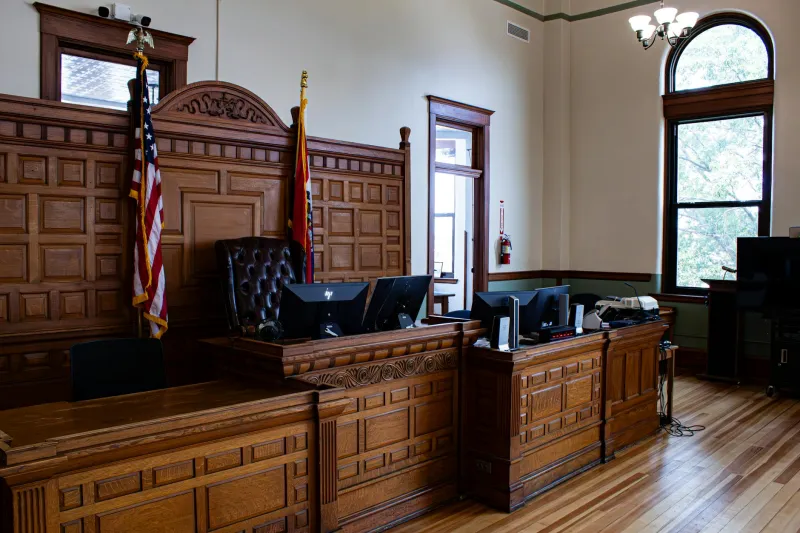
The Crime That Shook Hickman County
Some stories sound too bizarre to be true, but in 1934, the residents of Centerville, Tennessee, were dead serious about bringing a four-legged criminal to justice. Pep, a mixed-breed dog belonging to local farmer Bill Henderson, had committed what the town considered an unforgivable offense: killing Governor Austin Peay's prized rooster during a highly publicized visit to the county fair.
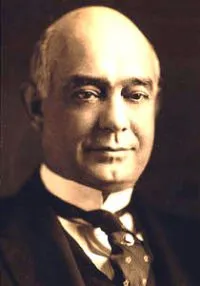 Photo: Governor Austin Peay, via tennesseeencyclopedia.net
The incident occurred on a sweltering August afternoon when Governor Peay arrived to dedicate the new fairgrounds. As dignitaries gathered around the governor's personal livestock display, Pep broke free from his owner's grip and made a beeline for the governor's champion rooster. Within seconds, the bird was dead, and Centerville's moment in the political spotlight had turned into a public relations nightmare.
What happened next defied all logic: the town decided to prosecute Pep in criminal court.
A Town Takes Justice Seriously
The decision wasn't made lightly. Centerville's mayor, Thomas Whitfield, called an emergency town meeting where residents debated the appropriate response. Some argued for immediate euthanization, while others demanded compensation. But Judge Samuel Morrison, a stickler for legal procedure, made an announcement that stunned everyone present.
"If we're going to seek justice," Morrison declared, "we'll do it properly. This animal will be charged, tried, and judged according to Tennessee law."
Within days, formal charges were filed against Pep for "malicious destruction of property" and "disturbing the peace." The case was docketed as The State of Tennessee v. Pep, and a trial date was set for September 15, 1934.
News of the impending trial spread beyond Hickman County, attracting reporters from Nashville and Memphis. Local businesses saw an opportunity, advertising "trial day specials" and renting rooms to curious visitors. What had started as a small-town embarrassment was becoming a genuine spectacle.
Enter the Defense Attorney
Most lawyers would have dismissed the case as a publicity stunt, but not Charles "Chuck" Patterson. A recent graduate of Vanderbilt Law School who had been struggling to build his practice in rural Tennessee, Patterson saw something different: a legitimate legal challenge that could establish important precedents.
Patterson's decision to take the case seriously baffled his colleagues. "Chuck's lost his mind," one fellow attorney told the local newspaper. "You can't defend a dog in criminal court."
But Patterson had been researching, and he discovered something remarkable: Tennessee law contained no explicit prohibition against animals as defendants. Moreover, the state's legal code included provisions for appointing counsel to any defendant unable to speak for themselves.
"The law is the law," Patterson argued in pre-trial motions. "If the state wishes to prosecute Pep as a criminal defendant, then Pep deserves the same constitutional protections afforded to any defendant."
The Trial That Captivated Tennessee
On September 15, over 300 spectators packed the Hickman County courthouse. Judge Morrison, determined to maintain dignity despite the unusual circumstances, insisted on proper courtroom procedure. Pep, wearing a makeshift collar and tie, sat beside Patterson at the defendant's table while court officers maintained order.
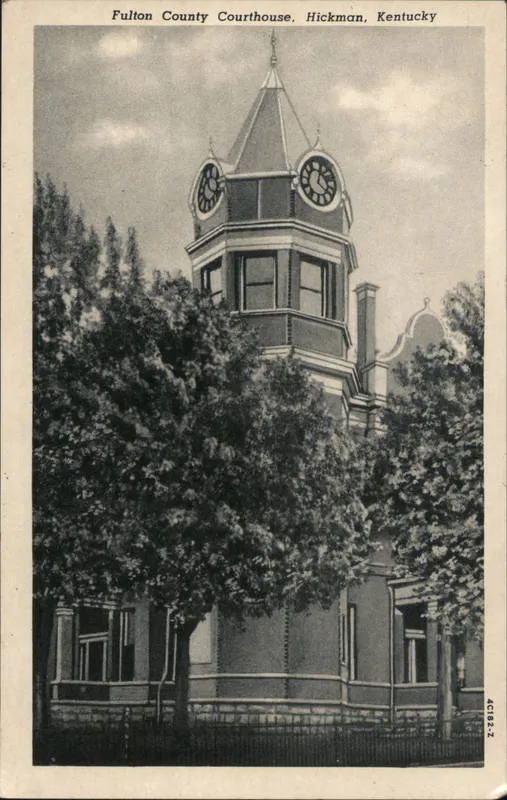 Photo: Hickman County courthouse, via www.cardcow.com
Prosecutor William Hayes presented what seemed like an airtight case. Multiple witnesses testified to seeing Pep attack the rooster. The governor's assistant provided documentation of the bird's value: $47, equivalent to nearly $900 today.
Patterson's defense strategy was brilliant in its simplicity. He argued that Pep had acted on natural instinct, not malicious intent, making criminal charges inappropriate. "Dogs chase chickens," he told the jury. "It's what they do. We don't prosecute wolves for hunting deer or cats for catching mice."
More importantly, Patterson challenged the very foundation of the prosecution. "Tennessee law requires criminal intent for conviction," he argued. "Can the state prove that Pep understood the difference between right and wrong? Can they demonstrate premeditation?"
The Verdict That Made History
After three hours of deliberation, the jury returned with a verdict that sent shockwaves through the legal community: not guilty on all charges.
Foreman Robert McKenzie explained the decision: "We couldn't find criminal intent. The dog was just being a dog."
Judge Morrison, while visibly relieved, acknowledged the precedent they had set. "This court has determined that natural animal behavior cannot constitute criminal conduct under Tennessee law," he stated for the record.
The acquittal made headlines across the South. Legal scholars debated the implications, while animal rights advocates hailed it as a landmark decision. Patterson's career took off immediately, with clients seeking the lawyer who had successfully defended a dog in criminal court.
The Legacy of Pep's Trial
The case of The State of Tennessee v. Pep remains unique in American legal history. No other state has attempted to prosecute an animal in criminal court with full legal proceedings, largely because Tennessee's experiment proved the absurdity of the concept.
Pep lived another eight years, becoming something of a local celebrity. Visitors to Centerville would often ask to meet "the dog that beat the state of Tennessee." Patterson kept a photo of himself and Pep in his law office until his retirement in 1971.
The trial also led to clarifications in Tennessee's legal code, explicitly stating that criminal prosecution requires human defendants. But for one brief moment in 1934, the American legal system took a dog so seriously that it gave him a fair trial — and lost.