The Walking Dead Man: How Ohio's Court System Killed Someone Who Wouldn't Stay Buried
When Being Alive Isn't Enough
Imagine walking into a courtroom, breathing, talking, and very much alive, only to have a judge declare you legally dead. That's exactly what happened to Donald Miller of Arcadia, Ohio, in 1994—and it took him 27 years to convince the state he was still among the living.
 Photo: Arcadia, Ohio, via townmapsusa.com
Miller's bizarre journey into legal non-existence began in 1986 when he abandoned his family and disappeared without a trace. His wife, struggling to manage debts and move forward with her life, eventually petitioned the court to have him declared dead. Under Ohio law, a person can be presumed dead after being missing for five years with no contact.
The Return of the "Dead" Man
In 1994, Miller decided to return to Ohio and reclaim his life. There was just one problem: according to the state of Ohio, Donald Miller no longer existed. His Social Security number had been deactivated, his driver's license invalidated, and his identity legally erased.
Confident that showing up alive would resolve everything, Miller walked into Judge Allan Davis's courtroom in Hancock County. He stood before the bench, spoke his own name, and argued his case personally. Surely, the judge would see that reports of his death had been greatly exaggerated.
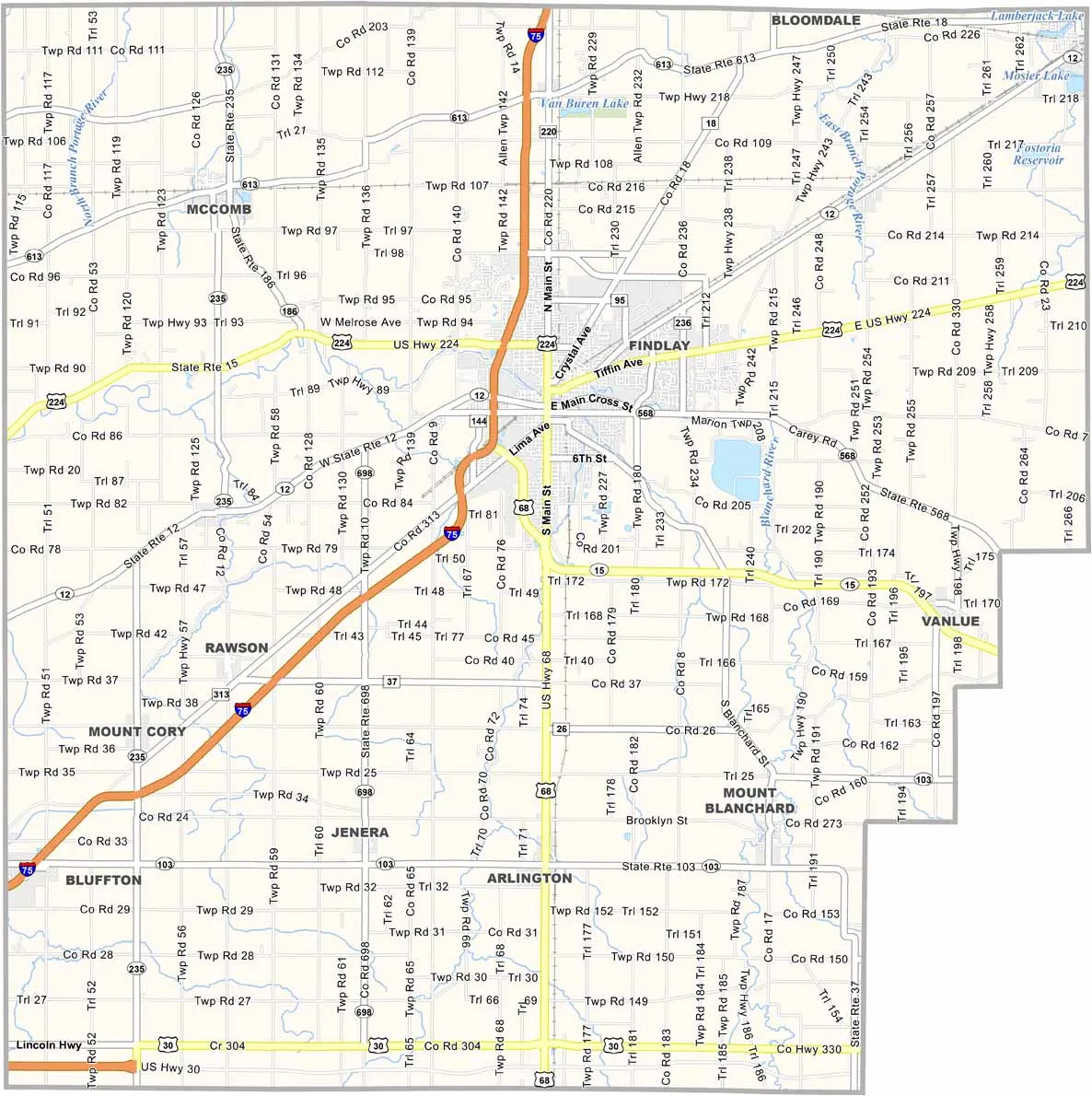 Photo: Hancock County, via uscountymaps.com
Judge Davis had other ideas.
The Ruling That Defied Logic
Despite Miller's very obvious existence, Judge Davis ruled that he would remain legally dead. The reason? Ohio's statute of limitations on reversing death declarations. According to state law, a person has only three years from the date of the death ruling to challenge it. Miller had missed that deadline by five years.
"I don't know where that leaves you, but you're still deceased as far as the law is concerned," Judge Davis told the very much alive man standing in his courtroom.
The ruling created an unprecedented legal paradox. Miller existed in a bureaucratic twilight zone—physically present but officially deceased, a walking contradiction of paperwork and reality.
Life as a Legal Ghost
For the next 27 years, Miller lived as what legal experts called a "bureaucratic ghost." He couldn't get a driver's license, open bank accounts, or access Social Security benefits. Credit agencies had no record of him. Healthcare providers couldn't process his insurance claims.
Yet somehow, the IRS had no trouble finding him. Miller continued paying taxes throughout his entire "death," a cruel irony that highlighted the selective blindness of bureaucracy. The government was perfectly willing to accept his money while refusing to acknowledge his existence.
Miller worked odd jobs, paid cash for everything, and lived in a legal limbo that would have been comical if it weren't so devastating. He became America's most documented undead citizen—filing tax returns from beyond the bureaucratic grave.
The Absurdity Compounds
The situation grew more surreal over time. Miller's "widow" remarried, his children grew up considering him dead, and his former life continued without him. Meanwhile, he lived just miles away, occasionally running into people who knew him—creating awkward encounters with his own "mourners."
Local media eventually picked up the story, turning Miller into a minor celebrity. "Ohio's Living Dead Man" became a cautionary tale about bureaucratic inflexibility, but the attention didn't help his legal status. The state remained unmoved by common sense.
Miller tried multiple appeals over the years, each time facing the same response: the law was the law, regardless of biological reality. Ohio's legal system had painted itself into a corner and refused to find a way out.
The Long Road Back to Life
It wasn't until 2020, during the COVID-19 pandemic, that Miller finally found a path back to legal existence. A new judge, examining the case with fresh eyes, agreed to hear arguments for overturning the death declaration.
The hearing was surreal even by Miller's standards. Now in his 60s, he had to prove he was alive to a court system that had spent decades insisting otherwise. Medical records, witness testimony, and decades of tax returns finally convinced the court that Donald Miller had, in fact, survived his own legal death.
Actually, It Happened
In October 2020, Donald Miller was officially declared alive—27 years after a judge ruled him dead while he stood in the same courtroom. The ruling made national news, highlighting the absurd inflexibility of legal systems designed more for paperwork than people.
Miller's case exposed fundamental flaws in how states handle death declarations and revealed the human cost of bureaucratic stubbornness. His story serves as a reminder that sometimes reality is stranger than any legal fiction—and that being right isn't always enough when you're fighting the system.
Today, Miller enjoys the simple privilege of existing in the eyes of his government. After nearly three decades as a living ghost, he can finally prove he's alive without having to argue the point in court.