The Great Escape Artist of Hamilton County
In the summer of 1937, a 90-pound capybara named Roosevelt broke free from Pemberton's Traveling Menagerie during their stop in rural Hamilton County, Ohio. What should have been a simple animal recovery became one of the strangest electoral stories in American history, proving that democracy gets weird when nobody's paying attention to the fine print.
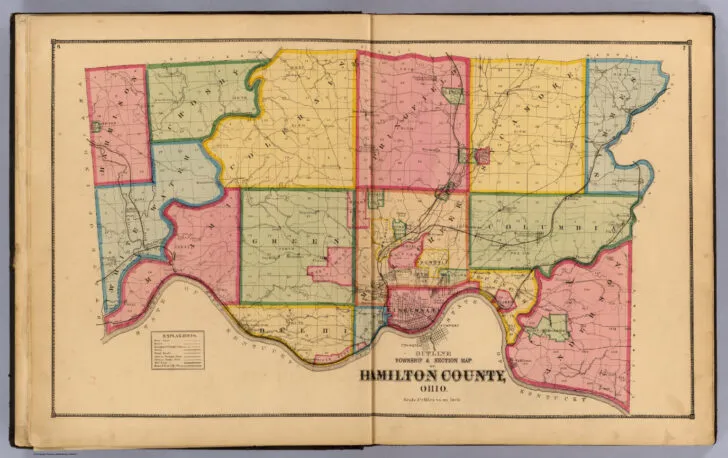 Photo: Hamilton County, via mapofohio.net
 Photo: Pemberton's Traveling Menagerie, via static.wikia.nocookie.net
Roosevelt wasn't just any escaped exotic animal. During his three months of freedom, the giant rodent became something of a local celebrity, regularly spotted grazing near the county fairgrounds like he owned the place. Children would bike out just to catch glimpses of him lounging by the creek. Local farmers reported finding him peacefully sharing pasture space with their cattle, apparently having negotiated some kind of interspecies détente.
The capybara's gentle demeanor and seemingly intelligent behavior charmed residents who had never seen anything like him. Unlike typical escapees who cause chaos, Roosevelt appeared to have simply decided that rural Ohio suited him better than circus life.
From Mascot to Candidate
The Hamilton County Fair Board election that fall was typically a sleepy affair. Five positions were up for grabs, with seven candidates running on platforms of "more pie contests" and "better livestock facilities." Voter turnout usually hovered around 200 people, mostly local farmers and business owners who cared deeply about agricultural competitions and little else.
That's when local hardware store owner Jim McKenna decided to have some fun. During a particularly boring town meeting about fair board responsibilities, McKenna jokingly suggested that Roosevelt the capybara would make a better board member than most of the human candidates. "At least he shows up to the fairgrounds every day," McKenna quipped, "which is more than you can say for some folks."
The joke took on a life of its own. Someone printed unofficial "Roosevelt for Fair Board" flyers featuring a crude drawing of a capybara wearing a top hat. The local barbershop started a betting pool on how many write-in votes the animal would receive. What began as small-town humor was about to collide with Ohio election law in spectacular fashion.
Election Day Shenanigans
November 3, 1937, dawned crisp and clear in Hamilton County. Poll workers at the Grange Hall expected their usual quiet day of processing a few dozen ballots. Instead, they found themselves facing an unprecedented situation that would require consultation with the county clerk, the state attorney general, and eventually a very confused federal elections official.
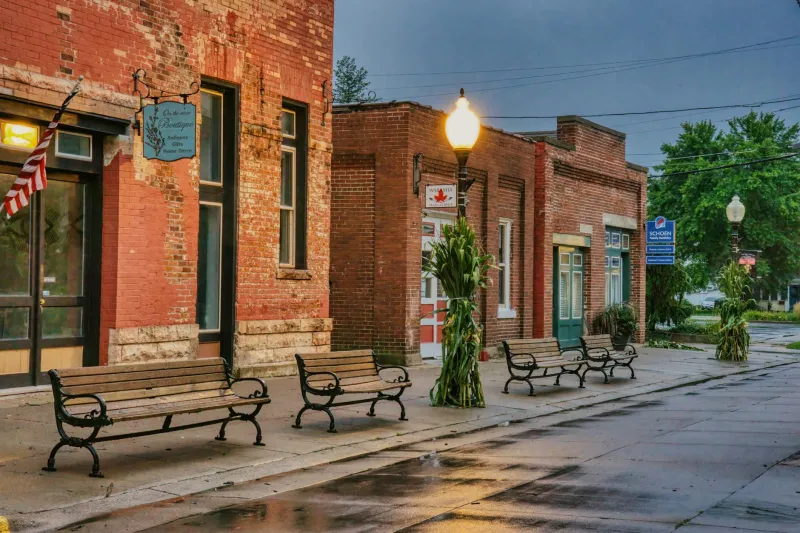
 Photo: Grange Hall, via pqnk.com
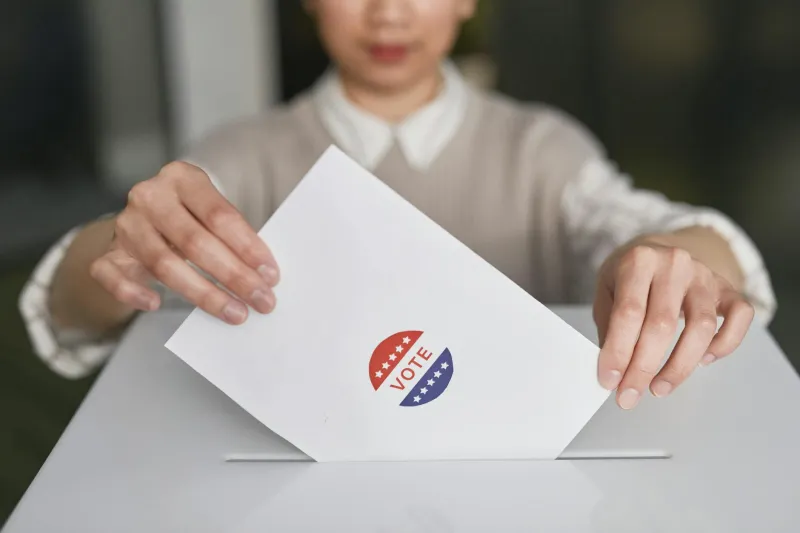
The write-in votes for Roosevelt started appearing early and kept coming. By noon, poll workers had counted more ballots for the capybara than for any human candidate. Some voters wrote "Roosevelt" in careful cursive. Others specified "Roosevelt the Capybara" to avoid confusion with the president. One ballot simply read "The Big Water Pig" with an arrow pointing to the fair board section.
By closing time, Roosevelt had received 347 write-in votes—more than the combined total of the two leading human candidates. The capybara had won a seat on the Hamilton County Fair Board by the largest margin in the election's history.
The Legal Scramble
What happened next exposed a fascinating gap in Ohio's election laws. While the state had detailed requirements for human candidates—age restrictions, residency requirements, filing deadlines—nobody had thought to specify that candidates needed to be, well, human.
County Clerk Martha Hendricks spent three sleepless nights poring over election statutes, looking for any provision that would invalidate Roosevelt's victory. She found requirements for literacy (Roosevelt couldn't read), property ownership (he was technically still property of the traveling menagerie), and citizenship (definitely not applicable), but nothing that explicitly barred non-human candidates from holding office.
The state attorney general's office was equally stumped. A hastily convened legal panel determined that while Roosevelt's election was "highly irregular and unprecedented," it wasn't technically illegal under existing statutes. The capybara had been duly elected according to the democratic process, creating what one legal scholar called "the most constitutionally sound absurdity in Ohio history."
The Brief Reign of Board Member Roosevelt
For exactly seventeen days, Hamilton County had a capybara serving on its fair board. Roosevelt never attended meetings (he was still living wild near the fairgrounds), but his election stood in the official records. Local newspapers picked up the story, turning the community into a brief sensation across Ohio and neighboring states.
The situation resolved itself in typically anticlimactic fashion. Pemberton's Traveling Menagerie, having tracked their missing star performer through newspaper coverage, arrived with proper documentation proving Roosevelt was their property. Since Ohio law prevented property from holding elected office, the capybara was quietly removed from the board and returned to circus life.
A special election was held to fill the vacant position, with notably higher turnout than usual. The winner was Jim McKenna, the hardware store owner whose joke had started the whole mess. His campaign slogan? "At Least I'm Human."
Democracy's Strangest Lesson
Roosevelt's brief political career prompted Ohio to update its election laws, explicitly requiring candidates to be human citizens. Similar clarifications appeared in statutes across the Midwest, as other states realized their own legal vulnerabilities to write-in campaigns featuring livestock, pets, or escaped circus animals.
The story became local legend, told and retold at county fairs across Ohio. Roosevelt himself lived another decade with the traveling menagerie, never knowing he had briefly held elected office in rural America. His political legacy endures in the Hamilton County Fair Board meeting minutes, where his name appears exactly once: "Board Member Roosevelt: Absent."
It remains the only documented case of a South American rodent winning democratic election to public office in the United States—a distinction that, frankly, may never be challenged.