The Minnesota Hamlet That Started Its Own Country Over a Pothole — And Made the Feds Play Along
When Bureaucracy Meets Small-Town Spite
Imagine you're driving through rural Minnesota in 1977, minding your own business, when suddenly you hit a roadblock. A man in overalls approaches your car window, tips his hat, and asks to see your passport. You're not crossing into Canada — you're entering the newly independent Republic of Kinney, population 27, where the coffee is strong and the grievances against the federal government are stronger.
This isn't the setup to a quirky comedy film. This actually happened, and it all started with the most American complaint imaginable: terrible roads.
The Great Kinney Road Crisis of 1977
Kinney, Minnesota, wasn't much to look at even in its heyday. Tucked away in the northern woods near the Canadian border, this unincorporated community consisted of a handful of families, a small store, and one very important thing: a road that connected them to the rest of civilization.
That road, however, had seen better days. By 1977, it had deteriorated into what locals generously called "a series of connected potholes." The residents had been complaining to county and state officials for years, but their pleas fell on deaf ears. The road was too remote, they were told. Too expensive to fix. Not a priority.
For most communities, this would have meant grumbling over coffee and maybe writing a strongly worded letter to the local newspaper. But the residents of Kinney were made of sterner stuff — the kind of stubborn Nordic stock that had settled Minnesota's wilderness in the first place.
Led by a local character named Elmer Anderson, the community decided that if the United States government couldn't be bothered to maintain their road, then maybe they didn't need to be part of the United States anymore.
The Birth of a Nation (Sort Of)
On a cold morning in November 1977, the residents of Kinney gathered at the local store and did something that hadn't happened since the Civil War: they voted to secede from the United States of America.
But this wasn't your typical separatist movement. The newly minted Republic of Kinney wasn't interested in armed rebellion or constitutional crises. They just wanted their road fixed, and they figured that declaring independence might get someone's attention.
Anderson appointed himself as the republic's first foreign minister (a title he wore with considerable pride), and the community immediately set about establishing all the trappings of a sovereign nation. They designed a flag, wrote a constitution, and most importantly, established a border crossing complete with a customs checkpoint.
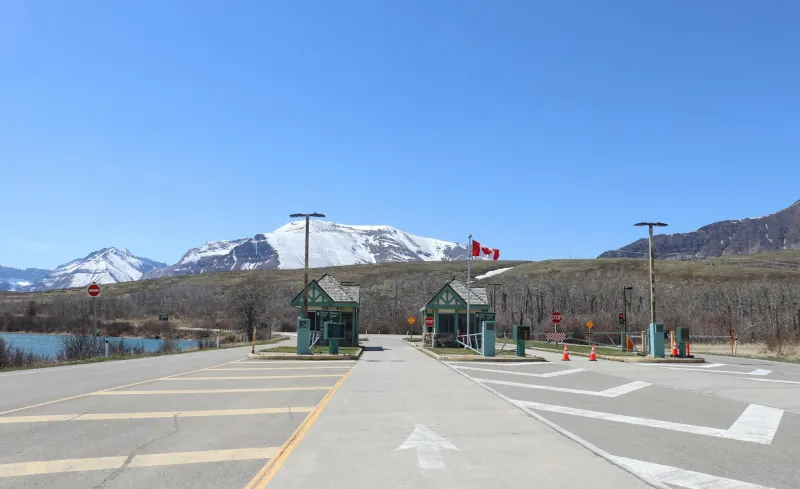
The checkpoint consisted of a folding table, a couple of lawn chairs, and a hand-painted sign that read "Welcome to the Republic of Kinney — Passport Required." Anderson and his fellow citizens took turns manning the border, politely asking confused travelers for their documents and explaining that they had just entered a foreign country.
International Incidents in the North Woods
What happened next was pure Minnesota nice meets bureaucratic absurdity. Instead of dismissing the whole thing as a publicity stunt, some travelers actually played along. Word spread, and soon people were making detours just to get their passports stamped at America's newest border crossing.
The "foreign minister" even issued official Kinney passports — hand-drawn documents that featured the republic's seal (a pine tree) and Anderson's signature. These became collector's items, with visitors from across the Midwest stopping by to add the Republic of Kinney to their list of countries visited.
Local media caught wind of the story, and suddenly Kinney was international news. Anderson found himself giving interviews to reporters from as far away as Europe, explaining how a road dispute had led to the creation of America's 51st state — or rather, its newest neighboring country.
The Federal Government's Surprising Response
Here's where the story gets truly unbelievable: the federal government's response was essentially a collective shrug.
While you might expect FBI agents or federal marshals to show up and restore order, the reality was far more mundane. Government officials treated the whole affair as a harmless bit of small-town theater. The State Department didn't recall any ambassadors. The Pentagon didn't mobilize troops. The IRS didn't even stop collecting taxes.
In fact, the only official response came from a bemused county commissioner who told reporters that Kinney was welcome to secede, but they'd still be responsible for their property taxes.
This bureaucratic indifference was perhaps more insulting than any heavy-handed crackdown would have been. Here was a community that had declared independence from the most powerful nation on earth, and Washington's response was basically, "That's nice, dear."
Victory Through Absurdity
The Republic of Kinney maintained its independence for several months, operating its border checkpoint and issuing passports to amused tourists. Anderson even established diplomatic relations with other "micronations" around the world, exchanging letters with similarly minded separatists who had declared independence from their respective countries over various grievances.
But the real victory came in the spring of 1978, when county officials quietly announced that funding had been found to repair the Kinney road. Whether this was coincidence or a direct result of the international embarrassment caused by having an independent republic in their jurisdiction, no one would say officially.
Anderson graciously accepted this diplomatic overture and announced that the Republic of Kinney would rejoin the United States, effective immediately. The border checkpoint was dismantled, the passports were retired, and life in northern Minnesota returned to normal — except for the now-smooth road that had started it all.
The Lesson of Kinney
The story of Kinney's brief independence reveals something uniquely American: sometimes the most effective way to deal with government bureaucracy is to embarrass it into action. In a country built on the idea that governments derive their power from the consent of the governed, 27 Minnesota residents proved that withdrawing that consent — even symbolically — could still get results.
Today, Kinney is just another dot on the map, its revolutionary period remembered mainly in local folklore and the occasional historical society newsletter. But for a few months in 1977-78, it stood as proof that in America, even the smallest voices can make themselves heard — especially when they're armed with folding tables, hand-painted signs, and the kind of stubborn determination that once built this country in the first place.
The road, by the way, is still in pretty good shape.