The Doctor Who Chugged Bacteria to Win Medicine's Most Disgusting Nobel Prize
The Most Revolting Research Method in Medical History
In 1984, a 32-year-old Australian doctor named Barry Marshall did something so scientifically reckless that it should have ended his career. Instead, it earned him a Nobel Prize and revolutionized how we treat one of the world's most common medical conditions.
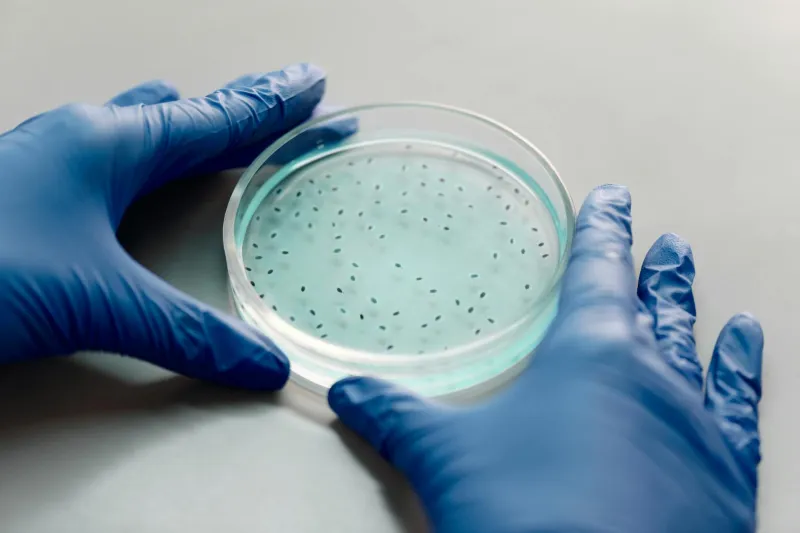
Marshall's weapon of choice? A petri dish full of stomach-churning bacteria that he deliberately drank like a particularly nasty cocktail. His target? The entire global medical establishment, which had spent decades treating stomach ulcers as a lifestyle disease when they were actually caused by microscopic bugs.
When Medical Dogma Meets Stubborn Reality
For most of the 20th century, doctors "knew" what caused stomach ulcers: stress, spicy food, and the fast-paced modern lifestyle. The treatment was equally straightforward: avoid stress, eat bland food, and pop antacids like candy. For severe cases, surgeons would remove parts of the stomach.
This conventional wisdom was so entrenched that when Marshall and his colleague Robin Warren first suggested that ulcers might be caused by bacteria, their peers didn't just disagree — they laughed. The idea was preposterous. Everyone knew that bacteria couldn't survive in the acidic environment of the stomach. Case closed.
Except Marshall and Warren had been finding spiral-shaped bacteria called Helicobacter pylori in stomach tissue samples from ulcer patients. A lot of bacteria. Like, suspiciously high amounts of bacteria that supposedly couldn't exist there.
The Hypothesis That Nobody Would Test
Marshall was convinced he was onto something huge. If H. pylori caused ulcers, then ulcers could be cured with antibiotics — a simple, cheap treatment that would replace decades of ineffective remedies. But he needed proof, and the medical community wasn't interested in providing it.
He applied for research grants to test his theory. Rejected. He submitted papers to medical journals. Rejected. He presented his findings at conferences. The audience literally laughed at him. One prominent gastroenterologist told him to "go back to the lab and learn some real medicine."
The problem was that proving his theory required infecting healthy subjects with potentially dangerous bacteria — something no ethics committee would ever approve. Animal testing wouldn't work because H. pylori was specifically adapted to human stomachs.
Marshall was stuck with an untestable hypothesis and a medical establishment that thought he was either crazy or incompetent. So he decided to become his own test subject.
The World's Most Dangerous Happy Hour
On July 30, 1984, Marshall walked into his lab at Royal Perth Hospital with the grim determination of a man about to do something spectacularly stupid. He had prepared a culture of H. pylori bacteria — the same stuff he'd been finding in ulcer patients' stomachs.
He mixed the bacteria in a solution and, without telling his wife or colleagues what he was about to do, drank it down in one gulp. Then he waited to see if he would develop an ulcer.
The taste, he later recalled, was "indescribable" — somewhere between rotten eggs and metal shavings. But taste was the least of his problems.
When Your Stomach Becomes a Science Experiment
Within days, Marshall felt terrible. His breath smelled like a garbage disposal, he was nauseous constantly, and his stomach felt like it was being attacked by tiny pirates with acid-dipped swords. He was developing gastritis — inflammation of the stomach lining that's the precursor to ulcers.
After ten days of misery, Marshall underwent an endoscopy to examine his stomach lining. The results were exactly what he'd hoped for and dreaded: his stomach was crawling with H. pylori bacteria, and he was well on his way to developing a full-blown ulcer.
Phase one of his insane experiment was complete. Now came phase two: curing himself.
The Antibiotic Cure That Changed Everything
Marshall immediately began a course of antibiotics — specifically, a combination of bismuth and metronidazole. Within two weeks, the bacteria were gone, his stomach inflammation had cleared up, and he felt normal again.
He had just proven that stomach ulcers were an infectious disease that could be cured with antibiotics. And he had the endoscopy photos to prove it.
When Marshall published his results, the medical community's reaction was... mixed. Some colleagues were impressed by his dedication to science. Others thought he was a reckless maniac who'd gotten lucky. Most were still skeptical that his single-person experiment proved anything.
The Long Road to Medical Revolution
It took another decade for Marshall's discovery to be widely accepted. Pharmaceutical companies weren't thrilled about the idea of replacing expensive long-term treatments with cheap antibiotics. Many doctors were reluctant to abandon decades of medical training. And some patients were skeptical about taking antibiotics for what they'd always been told was a lifestyle problem.
But gradually, the evidence became overwhelming. Study after study confirmed that H. pylori caused the vast majority of stomach ulcers. The World Health Organization declared H. pylori a carcinogen after linking it to stomach cancer. Medical textbooks were rewritten.
The Nobel Prize for Drinking Germs
In 2005, Marshall and Warren were awarded the Nobel Prize in Physiology or Medicine for their discovery. The Nobel Committee specifically noted Marshall's "self-experiment" as crucial evidence in overturning medical dogma.
During his Nobel lecture, Marshall joked that he was probably the only Nobel laureate who'd won the prize by deliberately making himself sick. He also noted that his discovery had led to the cure of millions of ulcer patients worldwide — people who no longer needed surgery or a lifetime of medication because of his willingness to drink a beaker full of stomach bugs.
The Ultimate Scientific Mic Drop
Marshall's story is more than just medical history — it's a testament to what happens when scientific curiosity meets bureaucratic stubbornness. Faced with a medical establishment that refused to test his theory, he literally put his money where his mouth was.
Today, H. pylori infections are routinely cured with a simple course of antibiotics. Stomach ulcer surgery has become rare. Millions of people have been spared years of pain and ineffective treatment. All because one Australian doctor was willing to do something so disgusting that it makes Fear Factor look like a cooking show.
The next time someone tells you that one person can't change the world, remind them of Barry Marshall — the man who revolutionized medicine by drinking bacteria and living to tell about it.