The Colorado Ghost Town That Built Itself Twice Without Knowing It
When History Forgets to Remember Itself
Somewhere in the Colorado Rockies, there's a valley that seems to whisper the same story twice. In the 1890s, a mining settlement called Belleville thrived there until devastating floods wiped it from both the map and memory. Four decades later, a completely different group of settlers chose the exact same spot, laid out nearly identical streets, and named their town Belleview—with no idea they were rebuilding on the bones of a forgotten community.
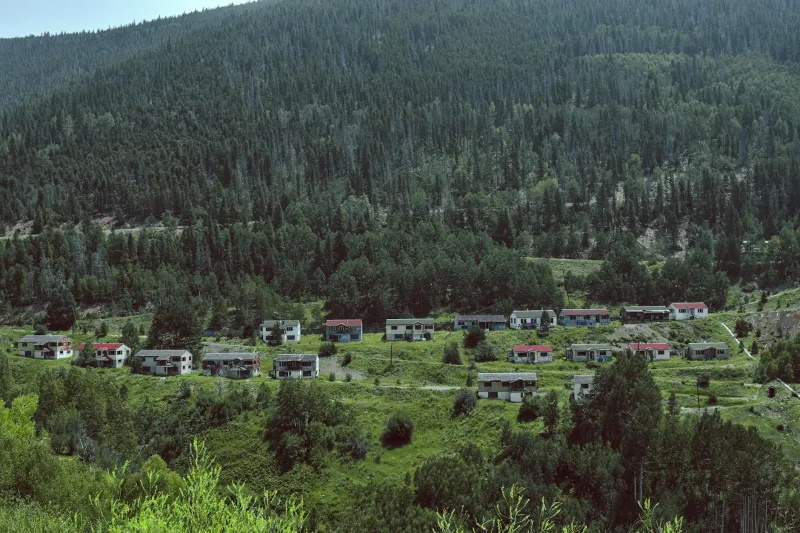
 Photo: Colorado Rockies, via wallpapers.com
The discovery of this remarkable coincidence didn't happen until 1987, when a local historian stumbled upon surveyor's maps that revealed the eerie parallel. Two towns, separated by decades and ignorance, following the same geographical logic with uncanny precision.
The First Belleville: Boom and Bust
The original Belleville was founded in 1884 during Colorado's silver rush. Prospectors had discovered rich veins of silver ore in the surrounding mountains, and within months, a thriving community of nearly 800 people had sprung up in the valley.
Like many mining towns of the era, Belleville grew organically around the demands of industry and geography. The main street followed the valley floor, parallel to Clear Creek. Side streets climbed the gentler slopes where miners built their homes. The business district clustered around the creek crossing, where a natural ford made transportation easier.
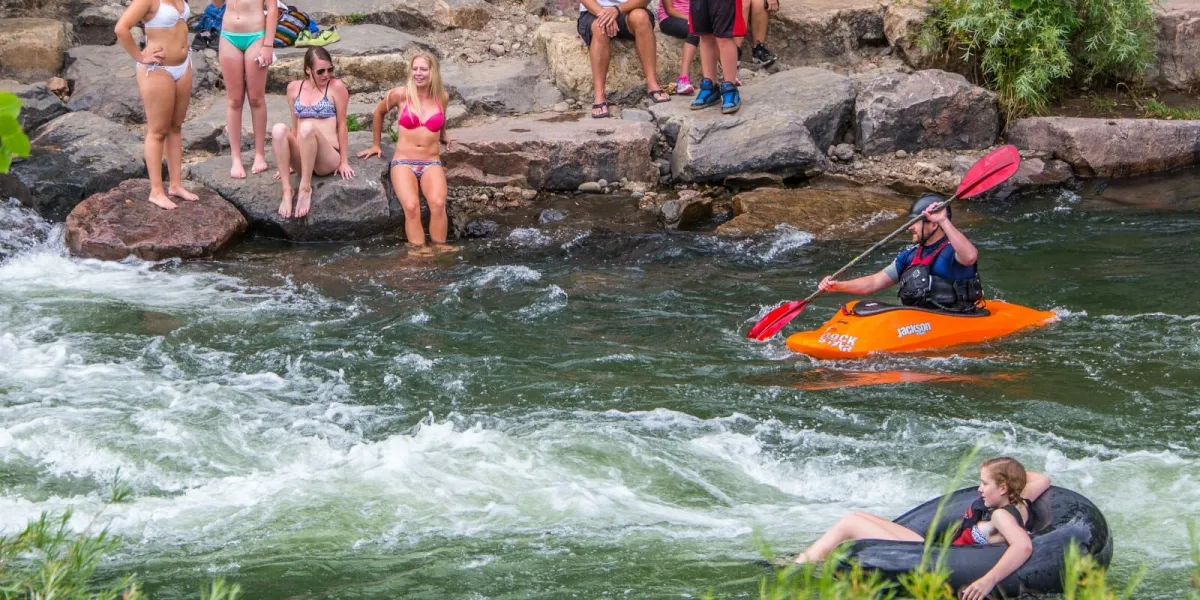 Photo: Clear Creek, via www.uncovercolorado.com
The town boasted two saloons, a general store, a boarding house, and even a small newspaper called the Belleville Clarion. For six years, it was a typical Colorado mining community—rough around the edges but full of optimism and opportunity.
Then came the floods of 1890.
Nature's Erasure
The winter of 1889-1890 brought unprecedented snowfall to the Colorado Rockies. When spring arrived, rapid warming created catastrophic flooding throughout the region. Clear Creek, normally a modest mountain stream, became a raging torrent that swept away everything in its path.
Belleville took the full force of the flood. The wooden buildings were demolished, the mining equipment scattered, and the residents fled to higher ground. When the waters receded, nothing remained but scattered debris and scarred earth.
Unlike other flood-damaged towns that rebuilt, Belleville's residents simply moved on. The silver boom was already fading, and many saw the disaster as a sign to seek opportunities elsewhere. Within months, the valley was empty again.
More remarkably, Belleville seemed to vanish from collective memory. No monuments marked its location. County records were lost in subsequent floods. Even the name disappeared from maps, as if the town had never existed.
The Forgotten Interlude
For forty years, the valley remained uninhabited. Occasional hunters and trappers passed through, but no one chose to settle permanently. The few remaining foundations were gradually covered by vegetation and erosion. Nature reclaimed the space, erasing the physical evidence of human habitation.
During this period, the broader region was changing. New roads connected different parts of Colorado. The mining boom gave way to ranching and early tourism. The specific location of the old Belleville faded from maps and memory, becoming just another unnamed valley in the vast Colorado wilderness.
By the 1930s, even longtime residents of the area had no clear recollection of the mining settlement that had once thrived there. The valley had become a blank slate, waiting for history to repeat itself.
The Second Coming: Belleview
In 1932, a group of families from Nebraska decided to homestead in Colorado. Led by farmer John Patterson, they were looking for good water access, fertile valley soil, and protection from harsh mountain winters. After months of searching, they found what seemed like the perfect location: a sheltered valley with a reliable creek and natural transportation routes.
Patterson and his fellow settlers had no idea they were choosing the exact same spot that had attracted miners forty-two years earlier. They simply recognized what their predecessors had: this valley offered the best combination of natural resources and geographical advantages in the area.
The new settlers named their community Belleview—a slight variation that reflected their focus on the beautiful mountain views rather than mining. They laid out their town with practical efficiency, following the same geographical logic that had guided the original Belleville.
The Eerie Parallels
Without any knowledge of the previous settlement, the Belleview founders recreated many of its features with startling accuracy. Their main street followed the valley floor parallel to Clear Creek, just like the original. They built their community center near the same creek crossing that had anchored the first town's business district.
Even individual lot divisions showed remarkable similarity. When historian Sarah McKenzie compared surveyor's maps from both eras in 1987, she found that property lines in the new town often matched those of the old with minimal variation. It was as if the valley itself dictated how human settlement should be organized.
The parallels extended beyond mere geography. Both communities developed similar social institutions: a general store, a community meeting hall, and informal gathering places that served the same social functions as the original town's saloons.
The Discovery
The remarkable coincidence remained unknown until McKenzie was researching Colorado mining history for her doctoral dissertation. While examining archived surveyor's maps in the Colorado State Archives, she noticed references to a town called Belleville in the exact location where Belleview had been established.
 Photo: Colorado State Archives, via www.ongenealogy.com
Further research revealed the full story: two communities, separated by decades, following identical geographical logic with no knowledge of their connection. McKenzie's findings, published in the Colorado Historical Society journal, made national news as an example of how geography shapes human behavior in predictable ways.
Actually, It Happened
The tale of Belleville and Belleview reveals something profound about the relationship between humans and landscape. Given similar needs and identical geographical constraints, people will often make remarkably similar choices, even across generations.
Today, Belleview remains a small community of about 150 residents. Many are descendants of the original 1932 settlers, and most are now aware of their town's unusual history. A small historical marker commemorates both settlements, acknowledging the valley's role as an unwitting stage for history's strange repetition.
The story serves as a reminder that while we like to think of ourselves as unique pioneers, we're often following paths laid down by geography, necessity, and the invisible logic of place. Sometimes, the land itself writes the story—we just think we're holding the pen.