The Chocolate Bar That Changed Every American Kitchen Forever
When Snack Time Met Military Science
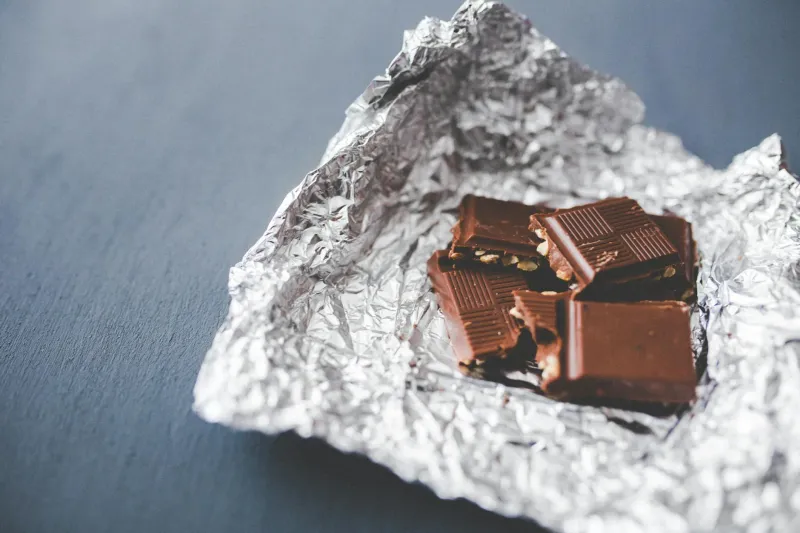
Percy Spencer was having a perfectly normal day at work in 1945, standing in front of a massive radar transmitter called a magnetron, when he reached into his pocket for a quick snack. What he found instead was a gooey mess where his chocolate bar used to be.
Most people would have cursed their luck, thrown away the melted candy, and moved on with their day. But Spencer was a Raytheon engineer working on cutting-edge military radar technology, and he had the kind of curious mind that asks "why" when things go sideways.
That moment of scientific curiosity would accidentally revolutionize American kitchens forever.
The Popcorn Experiment That Started Everything
Spencer's first thought wasn't "I've discovered something amazing." It was more like "Did this radar equipment just cook my lunch?" So he did what any reasonable engineer would do — he ran a test.
The next day, he brought a bag of popcorn to work and held it near the magnetron. Within seconds, kernels started popping all over the lab. His colleagues probably thought he'd lost his mind, but Spencer was onto something huge.
For his third experiment, Spencer decided to go big. He brought in a whole egg and placed it near the radar transmitter. This time, he had the good sense to poke a hole in the shell first. Good thing, too — the egg cooked so fast that when a skeptical colleague leaned in for a closer look, it exploded right in his face.
Spencer had just discovered microwave cooking, though he didn't know it yet.
From Military Weapon to Kitchen Appliance
The magnetron Spencer was working with wasn't designed to heat food — it was designed to detect enemy aircraft. During World War II, radar technology using magnetrons had given the Allies a crucial advantage, and Raytheon was one of the companies perfecting the technology for military use.
But Spencer realized that the same microwave radiation that could spot incoming bombers could also cook dinner in a fraction of the time it took conventional ovens. The microwaves worked by making water molecules vibrate rapidly, generating heat from the inside out.
Within a year, Raytheon had filed a patent for what they called "microwave cooking." Spencer's accidental discovery was about to become very intentional.
The Six-Foot-Tall Monster That Started It All
In 1947, Raytheon released the first commercial microwave oven, and it was absolutely nothing like the compact countertop models we know today. The "Radarange" stood nearly six feet tall, weighed 750 pounds, and cost $5,000 — roughly equivalent to $60,000 in today's money.
That's right: the first microwave oven cost more than most Americans paid for their entire house.
The Radarange was primarily marketed to restaurants and commercial kitchens, because no regular family could afford what was essentially a refrigerator-sized cooking device that cost more than a luxury car. Early models required water cooling systems and had to be professionally installed.
Restaurant owners who bought the Radarange discovered they could cook a hamburger in 35 seconds or heat a frozen dinner in under two minutes. It was revolutionary technology, but it would take another two decades before microwaves became small and affordable enough for home use.
How a War Engineer Became a Kitchen Revolutionary
Percy Spencer wasn't a chef or a kitchen designer — he was a largely self-taught engineer who had dropped out of school at age 12 to work in a mill. By the time he accidentally invented microwave cooking, he already held dozens of patents for radar and radio technology.
Spencer's background in military electronics made him uniquely positioned to recognize the potential of his chocolate-melting discovery. He understood both the physics of microwave radiation and the engineering challenges of turning a military radar component into a consumer appliance.
Raytheon eventually made Spencer a senior vice president, and he continued working on microwave technology improvements until his retirement. He held 300 patents by the time he died in 1970, but none would have the cultural impact of his accidental food-heating discovery.
The Billion-Dollar Accident
Today, more than 95% of American households own a microwave oven. The global microwave oven market is worth over $25 billion annually. College students reheat pizza at 2 a.m., office workers heat up leftover Chinese takeout for lunch, and busy parents warm up baby bottles in seconds.
All because a curious engineer in 1945 wondered why his chocolate bar had turned into soup.
Spencer's discovery proves that some of the most transformative innovations happen completely by accident — when someone with the right knowledge encounters an unexpected problem and asks the right questions. He wasn't trying to revolutionize cooking; he was just trying to figure out why his snack had melted.
The next time your microwave beeps to signal that your leftovers are ready, remember that you're using technology that started with a ruined piece of candy and a very curious mind. Sometimes the best discoveries happen when we're not even looking for them.