Brain Injury Turned a Regular Guy Into a Musical Genius Overnight
The Dive That Changed Everything
Derek Amato was just a regular guy from Sioux Falls, South Dakota. He sold furniture, played in amateur bands, and had about as much classical piano training as your average person—which is to say, practically none. Then came October 27, 2006, the day a backyard pool party turned him into one of the most documented medical mysteries in modern neuroscience.
Amato was goofing around with friends, showing off by diving into a friend's pool. What he didn't realize was that the shallow end was shallower than he thought. His head struck the concrete bottom with a sickening crack that left him unconscious and bleeding.
When he woke up in the hospital, Derek Amato was a different person. Not in some metaphorical sense—literally different. His brain had rewired itself in ways that medical textbooks said shouldn't happen.
The Morning After Miracle
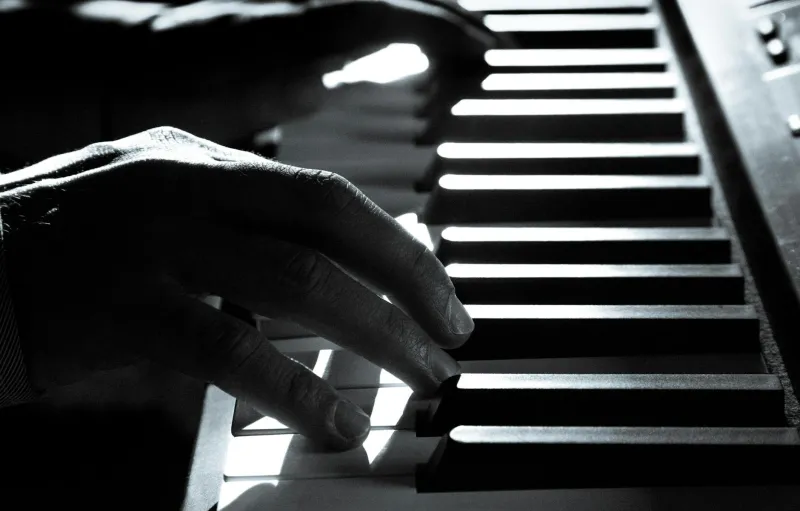
Three days after the accident, Amato was staying with friends while recovering from his severe concussion. He wandered over to their piano—an instrument he'd barely touched in his life—and sat down. What happened next defied everything he thought he knew about his own capabilities.
His fingers began moving across the keys with impossible fluency, playing complex compositions that seemed to flow directly from his brain to his hands. Not simple melodies or basic chords, but intricate, beautiful pieces that would take most people years to learn.
"It was like someone had downloaded the entire contents of a music conservatory directly into my head," Amato later described. "I could see the music in my mind—black and white keys floating in space, showing me exactly what to play."
His friends thought he was putting them on. After all, people don't just wake up one day with concert-level piano skills. But as the hours passed and Amato continued playing increasingly complex pieces, it became clear that something extraordinary had happened inside his skull.
The Science of Sudden Genius
What Amato experienced is called acquired savant syndrome, and it's rarer than being struck by lightning while winning the lottery. Fewer than 100 cases have been documented worldwide, and scientists still struggle to explain how a brain injury can unlock abilities that seemingly come from nowhere.
Dr. Darold Treffert, the world's leading expert on savant syndrome, studied Amato's case extensively. Brain scans revealed significant damage to the left hemisphere—the area typically associated with language and analytical thinking. But here's where it gets weird: the right hemisphere, responsible for spatial processing and creativity, had somehow compensated by developing extraordinary musical processing abilities.
"It's as if Derek's brain injury removed the inhibitions that normally prevent us from accessing dormant capabilities," Dr. Treffert explained. "The damage acted like a key, unlocking musical abilities that were always there but somehow blocked."
The theory suggests that we all might possess hidden talents locked away in our neural architecture, waiting for the right—or in this case, traumatic—trigger to set them free.
Living With Borrowed Genius
Amato's newfound abilities came with unexpected complications. He could compose beautiful, complex pieces, but reading traditional sheet music remained difficult. Instead, he "saw" music as patterns of black and white blocks floating in his visual field—a form of synesthesia that developed alongside his musical gifts.
He also lost some abilities he'd previously taken for granted. His short-term memory suffered significantly, and he developed severe hearing loss in one ear. The same brain injury that gave him musical genius took away other cognitive functions, creating a strange trade-off that no one fully understands.
"I can sit down and play for hours, creating music I've never heard before," Amato said in interviews. "But I might forget where I put my car keys five minutes after setting them down. It's like my brain decided to become a specialist at the expense of being a generalist."
The Mystery Deepens
What makes Amato's case even more puzzling is that his musical abilities continue to evolve. Years after the accident, he's still discovering new capabilities—different styles, techniques, and compositions that seem to emerge from nowhere.
Neurologists have studied his brain extensively, using advanced imaging techniques to map the changes in his neural networks. What they've found challenges fundamental assumptions about how the brain acquires and stores complex skills.
Normal musical training creates gradual changes in brain structure over years of practice. Amato's brain shows the neural patterns of someone who's been playing piano for decades, but compressed into the aftermath of a single traumatic event.
The Price of Extraordinary
Amato's story raises uncomfortable questions about the nature of human potential. If extraordinary abilities can emerge from brain trauma, what does that say about the limitations we accept in our normal lives? Are we all walking around with hidden talents that require catastrophic events to unlock?
The medical community remains divided. Some researchers see cases like Amato's as evidence that the brain contains vast untapped potential. Others argue that acquired savant syndrome represents a form of neural compensation—the brain desperately rewiring itself after damage, sometimes stumbling onto remarkable abilities by accident.
For Amato himself, the philosophical implications matter less than the daily reality of living with his transformed mind. He's released albums, performed concerts, and become an advocate for brain injury research. But he's also dealing with the ongoing effects of his accident—memory problems, hearing loss, and the strange sensation of possessing abilities that don't feel entirely his own.
The Accidental Virtuoso
Derek Amato's story reads like science fiction, but it's documented medical fact. A furniture salesman dove into a pool and emerged as a pianist, proving that the human brain remains one of the most mysterious and unpredictable organs in our bodies.
His case continues to puzzle researchers and inspire questions about the nature of talent, learning, and human potential. In a world where we're told that expertise requires 10,000 hours of practice, Amato achieved mastery in an instant—though at a cost no one would willingly pay.
Sometimes the most extraordinary transformations happen not through years of dedicated effort, but in the split second when everything we thought we knew about ourselves gets scrambled and reassembled in ways that shouldn't be possible. Derek Amato is living proof that reality doesn't always follow the rules we think govern human capability.