
The Invention That Wouldn't Work
Harold Morrison had a simple problem: his workshop windows were too high to reach comfortably. So in the summer of 1954, the retired machinist from Akron, Ohio, decided to build an automatic window opener that would respond to temperature changes.
 Photo: Akron, Ohio, via thumbs.dreamstime.com
The concept was straightforward enough. A metal coil would expand when heated, pushing the window open for ventilation. When temperatures dropped, the coil would contract, pulling the window closed. Morrison spent three months perfecting his design, filing down springs, adjusting tension, and calibrating the temperature sensitivity.
Then he tested it.
The window shot open so fast it cracked the glass. When he tried to close it manually, the mechanism jammed completely. The temperature coil had expanded too quickly, the spring tension was wrong, and the whole contraption was stuck in a half-open position that let in rain but provided no actual ventilation.
Morrison had built the world's most expensive way to break a window.
The Mistake That Changed Everything
Most inventors would have headed back to the drawing board. Morrison, however, had an unusual approach to failure: he studied it.
While trying to figure out why his window opener had malfunctioned so spectacularly, he noticed something odd. The jammed mechanism was vibrating. Not just a little tremor—it was producing a steady, rhythmic oscillation that seemed to serve no purpose whatsoever.
Curious, Morrison attached a small weight to the vibrating component. The weight began moving in a smooth, continuous motion, swinging back and forth with mechanical precision. He added more weight. The motion continued, steady as a metronome.
Morrison realized he'd accidentally created something far more interesting than a window opener: he'd built a perpetual motion device. Well, not actually perpetual—it needed the temperature differential to keep running—but it could maintain continuous movement for hours with no additional input.
From Window Opener to Kitchen Revolution
Morrison's first instinct was to fix the window opener and forget about the weird vibrating thing. But his wife, Dorothy, had a different idea.
She'd been watching Harold fiddle with his contraption for weeks, and she noticed that the steady back-and-forth motion was perfect for mixing. She convinced him to attach a small paddle to the oscillating mechanism and try it in a bowl of cake batter.
It worked beautifully. The mechanical motion provided consistent, even mixing without the need for manual stirring. Dorothy could start the device, walk away, and return to perfectly blended ingredients.
"Harold," she told him over dinner that night, "forget about the windows. Patent this thing for kitchens."
The Patent Application Nobody Understood
Morrison filed his patent application in November 1954 for what he called a "Thermal-Mechanical Oscillating Mixing Device." The patent office was baffled.
The application described a machine that was supposed to open windows but instead vibrated continuously when exposed to temperature changes. The examiner sent back three requests for clarification, asking Morrison to explain exactly what his invention was supposed to do.
Morrison's response was refreshingly honest: "The device opens windows incorrectly but mixes ingredients correctly. I am patenting the incorrect function."
After six months of back-and-forth correspondence, the patent office gave up trying to understand the logic and approved Patent #2,847,156 for Morrison's "thermal oscillating mechanism" in March 1955.
The Marketing Challenge
With patent in hand, Morrison faced a new problem: how do you sell a broken window opener as a kitchen appliance?
He started small, building a dozen units by hand and selling them at the Akron County Fair for $12 each. His sales pitch was unconventional: "This machine was supposed to open windows, but it doesn't. Instead, it mixes things really well."
Surprisingly, people bought them. Word spread through church groups and neighborhood coffee klatches about Harold Morrison's weird mixing machine that worked better than anything else on the market.
The Accidental Empire
By 1957, Morrison was manufacturing 500 units per month in his garage. He'd streamlined the design, replacing the temperature-sensitive components with a simple electric motor that reproduced the same oscillating motion.
The Westinghouse Corporation approached him in 1958, offering to license his patent for mass production. Morrison, who'd never intended to become a businessman, sold them the rights for $50,000 upfront plus royalties.
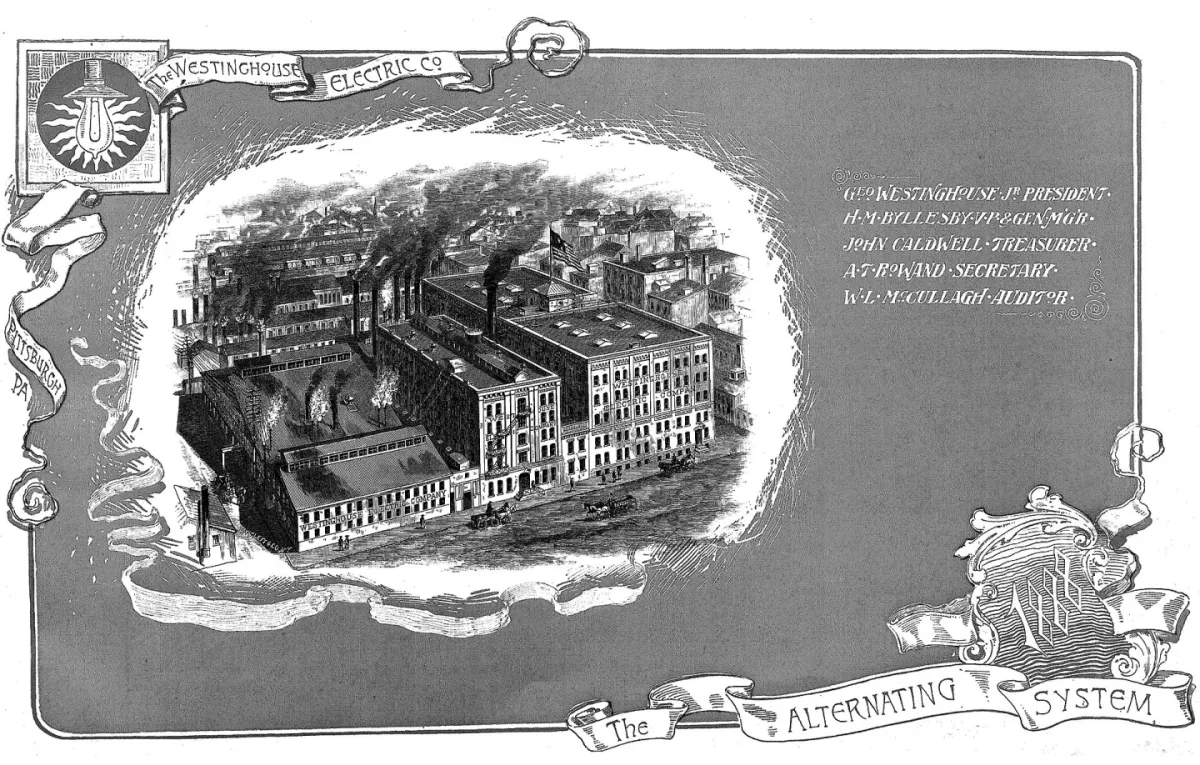 Photo: Westinghouse Corporation, via westinghouseprogressive.com
Westinghouse renamed Morrison's device the "Stand Mixer" and launched it nationally in 1959. The marketing department, wisely, made no mention of windows or malfunctions. They simply advertised it as "the mixer that does the work for you."
The Legacy of a Happy Accident
Morrison's broken window opener became one of America's most successful kitchen appliances. By 1970, over two million stand mixers based on his oscillating mechanism were in use across the country. The basic design—a motor driving an oscillating arm—remains essentially unchanged today.
Harold Morrison never did build a working window opener. He spent his royalty checks on a nice house with casement windows that opened manually, which he claimed worked just fine.
"Sometimes the best inventions are the ones that fail in exactly the right way," Morrison told Popular Mechanics in 1965. "I set out to solve one problem and accidentally solved a completely different one. Turns out the world needed better cake mixing more than it needed automatic windows."
The Moral of Morrison's Mixer
Morrison's story illustrates one of the great truths of innovation: sometimes the most valuable discoveries happen when everything goes wrong. His thermal window opener was a complete failure at its intended purpose, but that failure revealed an entirely new possibility.
The patent he filed wasn't for an invention—it was for an accident that turned out to be exactly what American kitchens needed. Morrison had stumbled onto something that would outlast him by decades, all because he was curious enough to study his mistakes instead of just throwing them away.
Today, when you see a stand mixer working its way through cookie dough or bread batter, you're watching Harold Morrison's window opener still failing perfectly after all these years.